A toilet that runs when nobody flushed is refilling a tank that is losing water. In most Lakeland and Plant City houses the leak is the flapper at the bottom of the tank, or the fill valve on the left side that will not close. Both waste water all night. The bowl can look normal the whole time.
The repair page is toilet repair in Lakeland. This post is the test you can do before that visit, and the split between a tank problem and a drain problem.
Why does my toilet keep running
People ask this when the refill starts again an hour after the last flush, or in the middle of the night. The tank level dropped. The fill valve opened to bring it back. Something let the water out, or the valve never got the signal to stop.
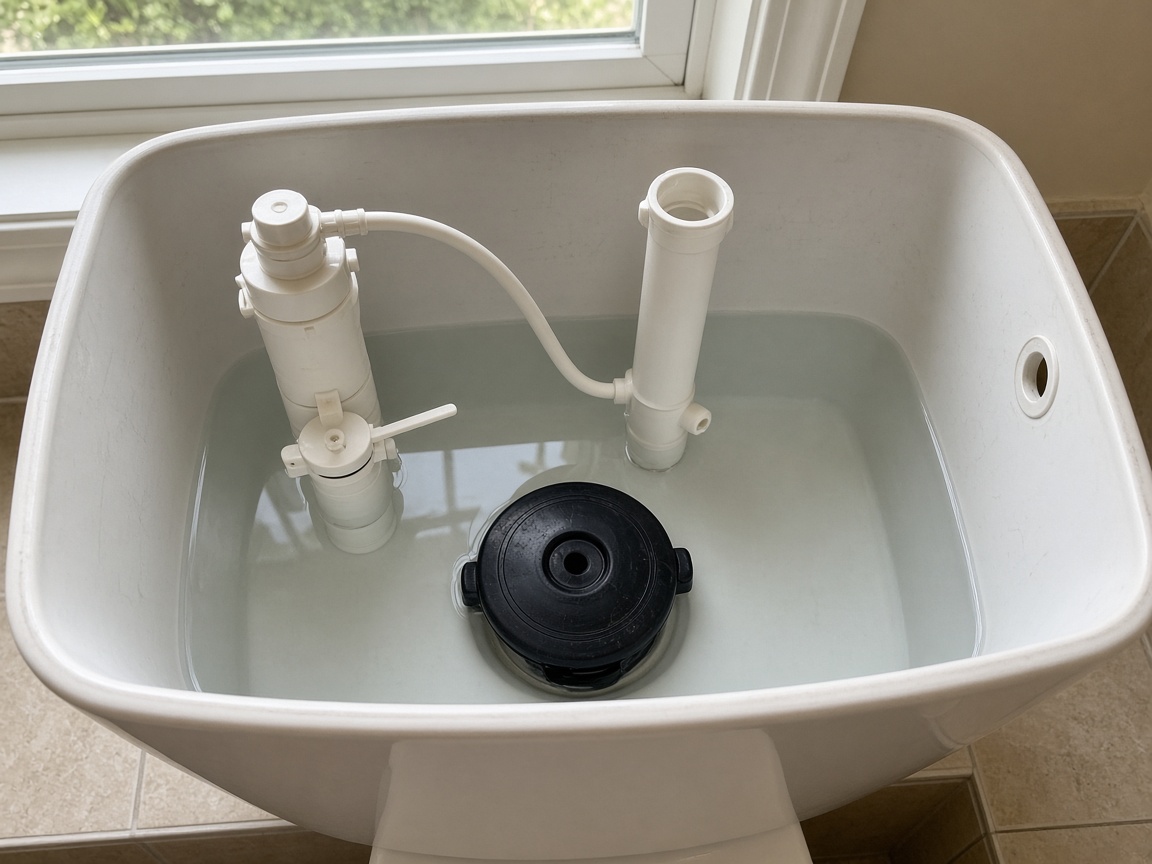
Two parts cover almost every one of these calls. The flapper seals the hole at the bottom of the tank. The fill valve brings supply water in and is supposed to shut off when the float rises. If either one fails, you hear the refill.
A cracked tank, or a supply line spraying at the wall, is louder and wetter. Shut the valve behind the toilet and skip the dye test. Water on the floor is the emergency, not a slow hiss.
The dye test
Lift the lid. Drop a little food coloring in the tank. Do not flush. Wait ten minutes.
Color in the bowl means tank water is slipping past the flapper. The fill valve hears the tank drop and opens again. That is the cycle you hear at 2 a.m.
No color in the bowl, and you still hear a hiss, means the fill valve is the problem. The float is set too high, the valve is worn, or scale is holding it open. Water then runs into the overflow tube. The supply never shuts off. That hiss is clean supply water, not a sewer smell.
Write down which result you got. It changes the part we bring.
The flapper
A flapper is a rubber disk on a chain. It lifts when you flush and should drop flat when the tank empties. Polk County water leaves scale on the seat it has to seal. The rubber warps. The dye test comes back positive even when the toilet looks fine from the outside.
Replacing the flapper is the usual fix when the dye shows up in the bowl and the porcelain is solid. A new flapper on a rough seat can leak again in a few months. On a toilet that has already had two flappers, we replace the flapper and the flush-valve seat together.
The chain length matters as much as the rubber. That section is below.
The fill valve and the overflow tube
The fill valve stands on the left side of the tank in a standard setup. A float or a cup rides the water level. When the level hits the set point, the valve closes. When the valve is worn, it never quite closes, and the extra water spills into the overflow tube so the tank does not flood the bathroom.
That spill is by design. It is also why the meter keeps moving. The overflow tube is doing its job. The valve is not.
We replace the fill valve as a unit. The toilet stays. If the supply line at the wall is crusted or weeping, that line gets replaced in the same visit so both ends of the connection are new. We quote the part before we install it.
A toilet that runs after every flush
A toilet that refills and then keeps running for a minute is often the chain, not a clog in the bowl. Too much slack and the flapper drops late, so the tank takes longer to seal. Too tight and the flapper cannot sit flat, so the dye test stays positive with a brand new disk.
A handle you have to hold down is the same chain, or a handle that has snapped at the tank wall. The handle is a small part. The chain is an adjustment. We set the slack so the flapper lifts clear and then drops.
If the water keeps running after that adjustment and the dye test is clean, go back to the fill valve. The two failures can sit in the same tank. Fixing only the one you can see leaves the hiss.
Shut the valve on the wall
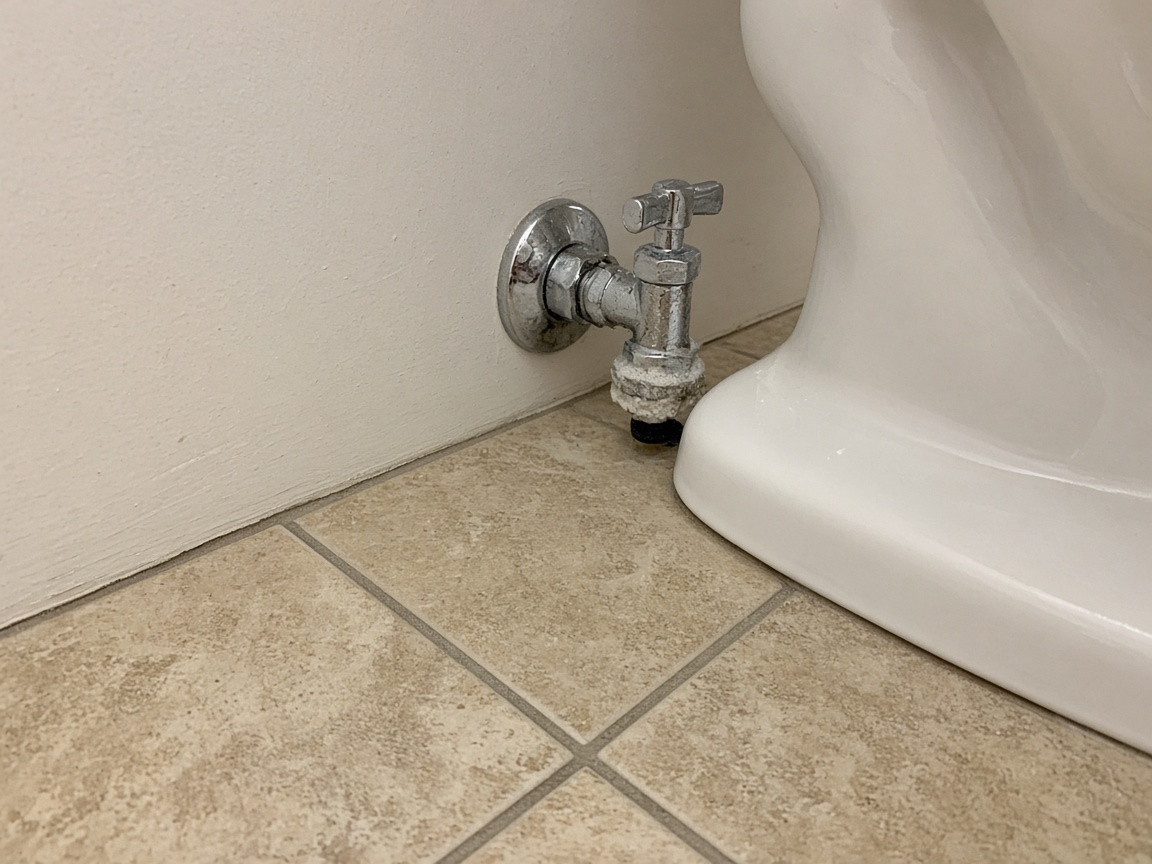
The chrome valve on the wall behind the toilet is the angle stop. It feeds this fixture only. Turn it clockwise until the hiss stops. The kitchen and the showers stay on.
Use it when the tank will not stop, when the supply line is wet, or when you are about to remove the lid and you do not want the valve to open while you are looking. Turn it back on to run the dye test. If the handle on that stop spins and the water does not stop, shut the house main and call. A failed stop is part of the visit.
A bowl that fills to the rim
A bowl that climbs when you flush is a different ticket. The flapper did its job. The waste is not leaving the bowl. Stop flushing. Another flush puts water on the floor.
A plunger is the first try while the water is still in the bowl. How to unclog a toilet without a plunger covers that bowl. It does not cover a tank that refills by itself.
If the plunger does not move it, the visit is drain cleaning. A flapper will not fix a bowl that rises.
Water that rises in the shower
Water in the shower or the tub when the toilet flushes is the main line. Stop using every fixture, including the washer. That water is looking for the lowest open drain.
That call is drain cleaning. If sewage is already in the tub, use emergency plumbing and the sewer backup page. A dye test in the tank will not explain a shower that rises.
One more split. A shower that drains slowly only when you use that shower can be hair in the trap. A shower that rises when a toilet in another room flushes is the shared line. Say which one it is when you call.
A toilet that rocks
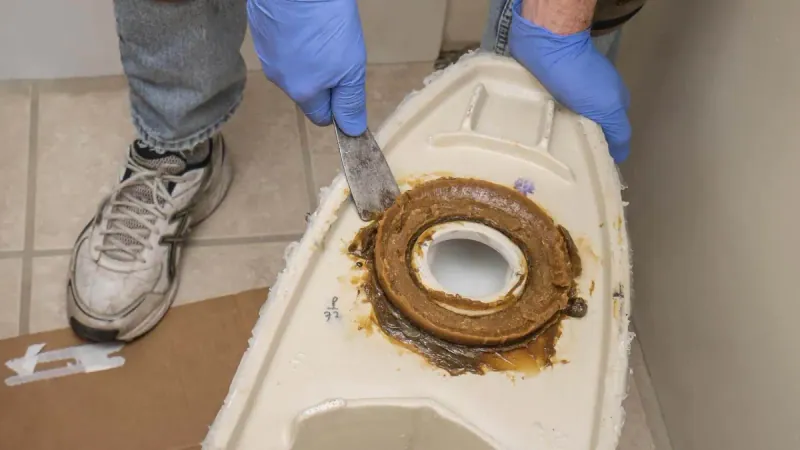
A toilet that rocks on the tile is a wax ring or a broken flange. You may see a dark line at the base after a flush, or a smell at the floor that the tank does not explain. Tightening the closet bolts on a rocking toilet cracks the porcelain. Leave the bolts alone.
We pull the toilet, look at the flange, and set a new wax ring. If the flange is broken below the tile, that is the repair, and the wax ring goes on after the flange will hold. A running tank and a rocking base can both be true. They are still two repairs.
Hard water and a flapper that fails again
Lakeland and Plant City water leaves scale on the flapper seat and inside the fill valve. A house that buys a new flapper every season is looking at the seat and the valve, not a third flapper from the same bin.
If every faucet has grit in the aerator and the water heater pops, the toilet is one symptom. The house-wide equipment is on the water softener page. We test before we talk about a softener. The toilet still gets the flapper or the valve the day you call. A softener does not stop a leak that is already past the rubber.
We do not do electrical work. A running toilet is plumbing under CFC1428965. A water heater full of scale is a separate visit on water heater repair.
If the dye test is positive and you want it stopped, call (863) 667-6364. Say Lakeland or Plant City, and say whether the bowl stays down or the shower is rising too.