

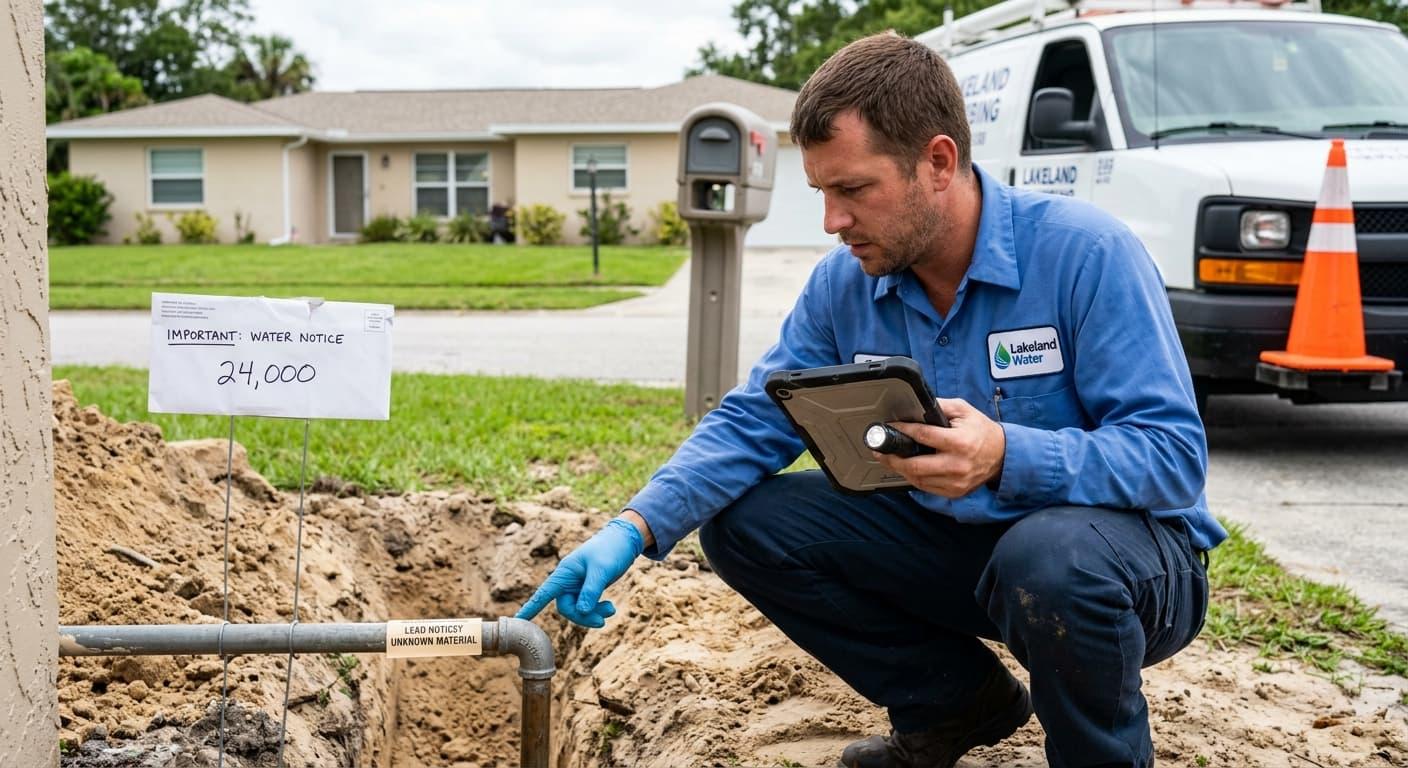
We dug into Lakeland’s water infrastructure records this month and found something that surprised us: about 24,000 local households received notices about their water service lines last year. But here’s the catch, those notices don’t mean anyone actually has lead pipes. They mean the city simply doesn’t know what material those lines are made of. We pulled the numbers, checked the sources, and put together this breakdown so Lakeland homeowners can separate fact from fear.
Three Surprising Findings
1. Florida’s lead pipe problem was massively overestimated, and the state lost $226 million because of it.
We found that Florida’s original lead service line estimate placed the state second nationally with over 1 million projected lines. But when the EPA reviewed the data, it found the numbers were unreliable. The actual count dropped dramatically, and the federal government de-obligated $226,138,000 in funding that had been allocated based on the bad data.
2. “Unknown” doesn’t mean “lead,” but Lakeland sent notices anyway.
The City of Lakeland notified roughly 24,000 households because records for their service line materials were missing. That’s about one-third of the city’s water customers. But here’s what matters: no lead service lines have been confirmed through the inventory work linked to those notices.
3. There is no safe level of lead, but the “action level” is 15 parts per billion.
The EPA’s Maximum Contaminant Level Goal for lead is zero ppm, because the agency recognizes no safe exposure threshold. Yet the regulatory action level sits at 15 ppb, creating a gap between what is legal and what is health-protective.
Key Findings
- 24,000 households received unknown service line notices in Lakeland. Source: LkldNow (Nov 2024)
- 9 million projected lead service lines nationwide. Source: U.S. EPA (May 2024)
- 1,014,952 projected lead-content service lines in Florida (original estimate). Source: NRDC/EPA (May 2024)
- $226,138,000 de-obligated from Florida’s lead pipe funding. Source: U.S. EPA (2025)
- 0.000445 ppm. Lakeland’s reported lead 90th percentile test result. Source: Lakeland Water Utilities via TapWaterData (Sept 2025)
- 0 ppm. EPA’s Maximum Contaminant Level Goal for lead. Source: CDC / EPA (Aug 2025)
-
- Year Lakeland prohibited lead in water pipe construction. Source: City of Lakeland (Oct 2024)
- Nov. 1, 2027. LCRI compliance deadline for all water systems. Source: Colorado DPHE / EPA (Oct 2024)
- 87% of Americans concerned about unfiltered tap water quality. Source: Aquasana 7th Annual Water Quality Survey (Aug 2025)
- $6.96 billion. Global home water filtration market size (2025). Source: TechSci Research
What This Means for Lakeland Homeowners
Let’s be clear about what the data actually shows: this is an information gap, not a contamination crisis.
Lakeland’s water quality consistently meets or exceeds state and federal standards. The reported lead result of 0.000445 ppm is far below the 15 ppb action level. The city has prohibited lead pipe construction since 1977.
But here’s the practical takeaway: if you live in a home built before 1977, you have more reason to verify your service line material, not panic, but verify. The city provides a magnet-and-coin test you can do yourself to check the pipe entering your home. If you can’t safely access the line or want definitive answers, that’s where a qualified plumber comes in.
The November 2027 compliance deadline means utilities will continue refining their inventories. Homeowners who already know their service line material will have far less uncertainty when future notices arrive.
Expert Quote
“We’ve seen the concern in our community, and we understand why. When you get a letter saying the material of your water line is unknown, that’s unsettling. But here’s what I want Lakeland homeowners to hear: unknown is not the same as confirmed lead, and our city’s water quality results are strong. That said, the gap between the legal limit and the safe limit for lead is real. We encourage anyone with an older home to test their service line material and, if they want certainty about what’s coming out of their tap, to request professional water testing. Don’t wait for a regulatory violation to take your family’s water quality seriously.”
Issac Turpin, CEO of True Corp and founder of True Plumbers & AC
Methodology Note
This analysis draws from EPA SDWIS federal reporting, City of Lakeland Pipe Inventory Program data, LkldNow local reporting, and industry water quality surveys. Figures represent the most recent publicly available data as of October 2026.
Closing
The numbers tell a more measured story than the phrase “lead pipe crisis” might suggest. Lakeland has a substantial inventory task ahead, but the city’s water quality remains strong, and the path forward is verification, not alarm.
Read the complete analysis with full methodology on our blog: Plumbing Services in Lakeland Confront Lead Pipe Inventory Crisis.
If you are concerned about your home’s service line material or want to schedule a water system evaluation, our team is here to help. Learn more about our water treatment services: Water Systems & Filtration.