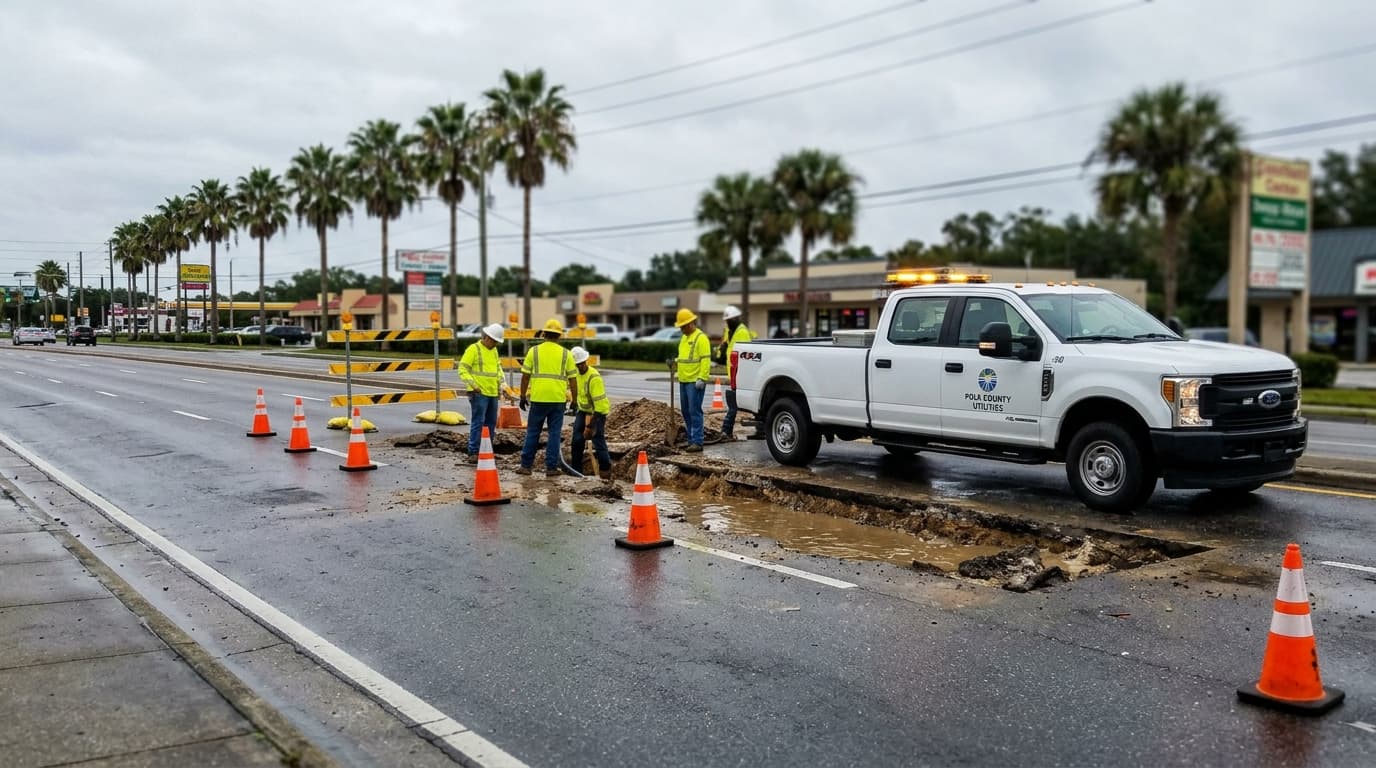
A water-main break near U.S. 98 and Gibsonia Galloway Road disrupted traffic in Lakeland on November 10, 2026. Polk County Utilities completed the repair the following day.
The incident shows how a public water-line failure can interrupt local services, while national data points to wider problems with aging pipes and water loss. Read on to learn what to check after an outage, how to spot a private plumbing leak, and when to call a licensed plumber.
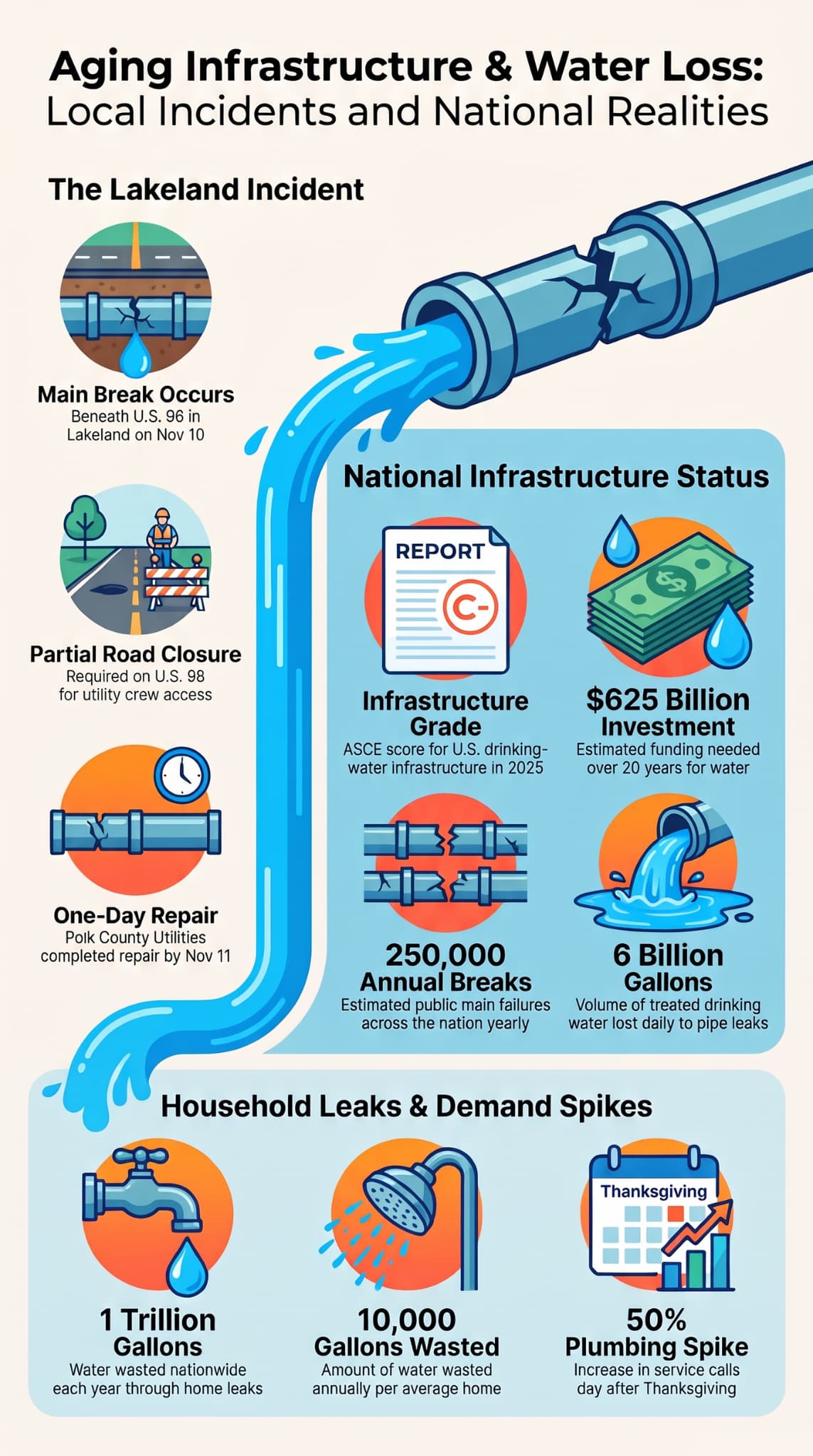
Key Statistics on Lakeland Water-Main Break Disrupts U.S. 98
The Lakeland incident offers a local example of the challenges facing public water systems. National data adds context about infrastructure conditions, water loss, household leaks, and seasonal plumbing demand. These ten statistics explain why homeowners should pay attention to their own water lines.
- 1 water-main break - Polk County Utilities reported a potable water-main break beneath U.S. 98 near Gibsonia Galloway Road in Lakeland on November 10, 2026.
- Partial roadway closure - Crews needed access to the damaged line, so part of U.S. 98 closed during repairs.
- Repair completed within 1 day - Polk County Utilities completed the repair and reopened the affected section on November 11, 2026.
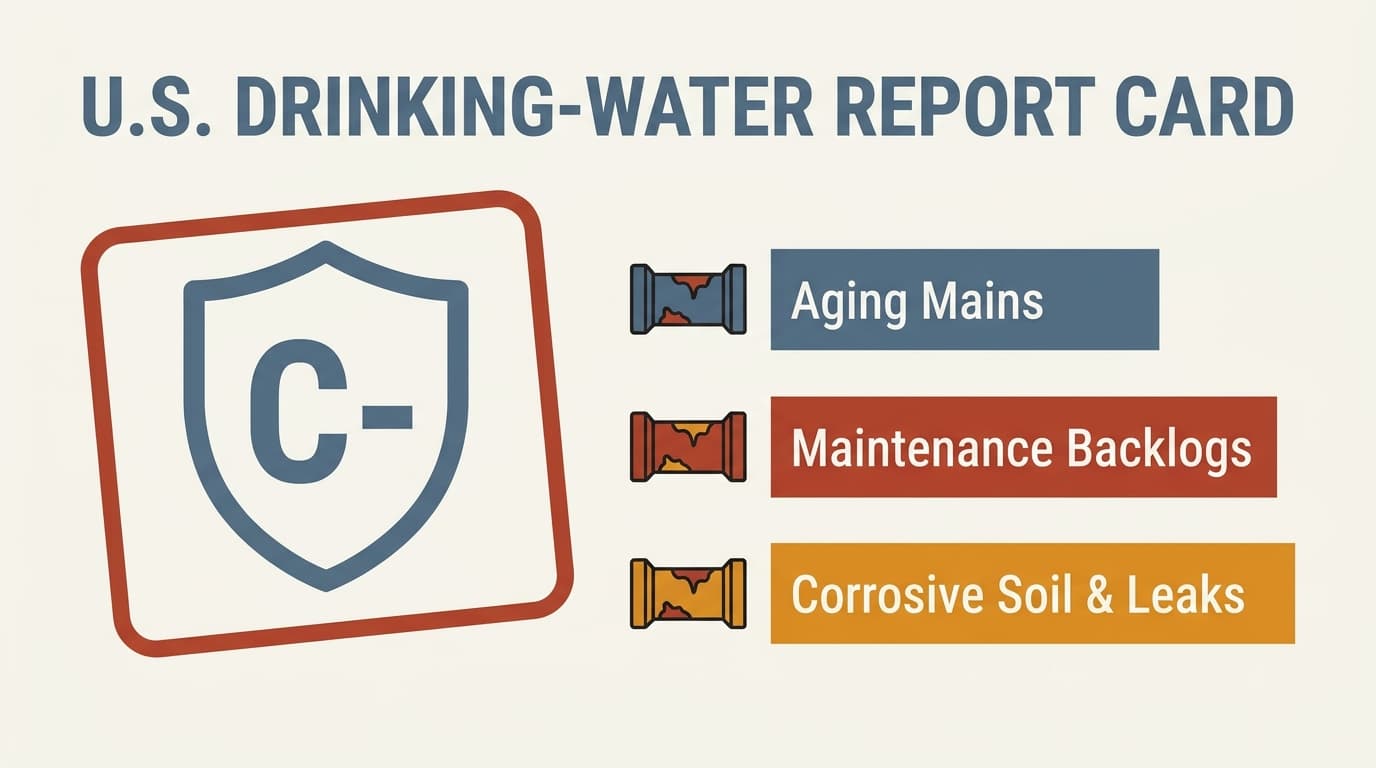
- C- grade - The American Society of Civil Engineers gave U.S. drinking-water infrastructure this grade in its 2025 Infrastructure Report Card.
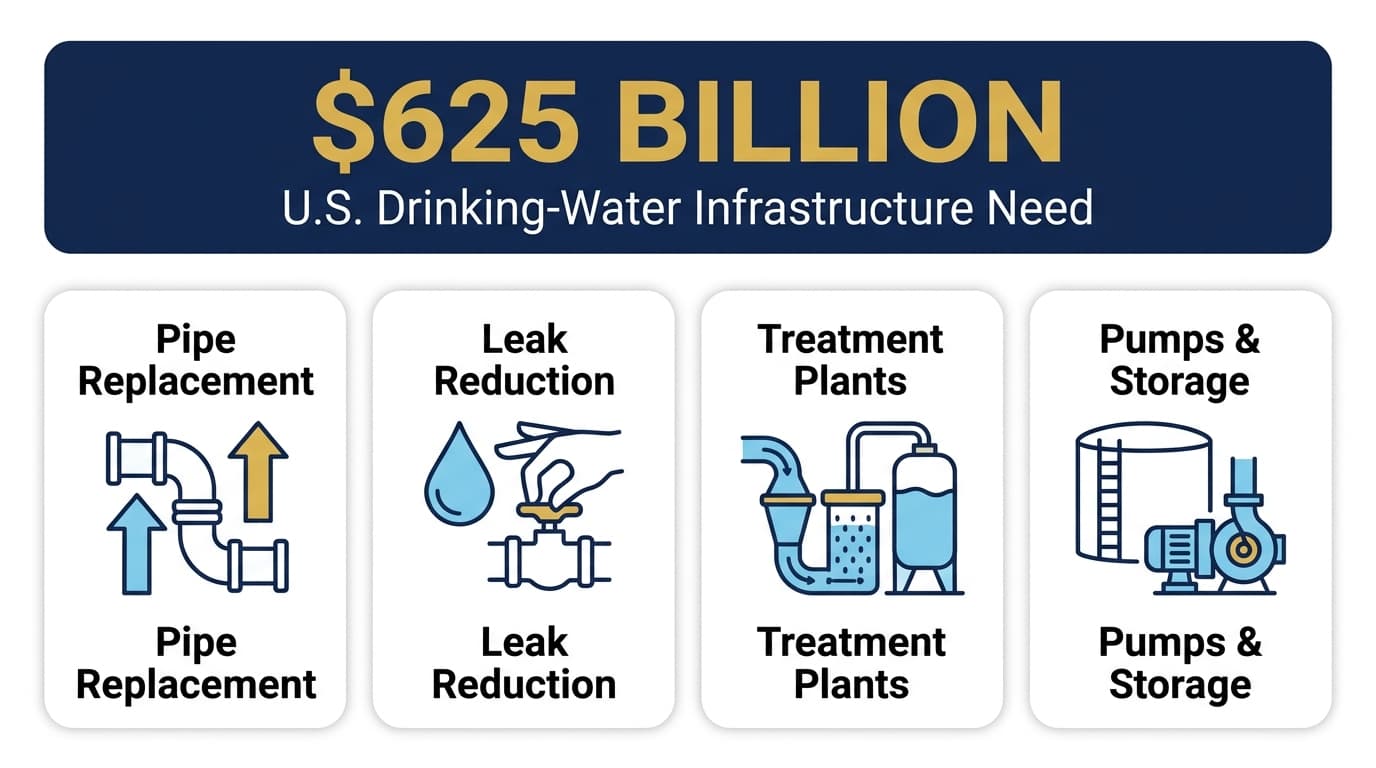
- $625 billion - ASCE estimates that the United States needs this amount in drinking-water infrastructure investment over 20 years.
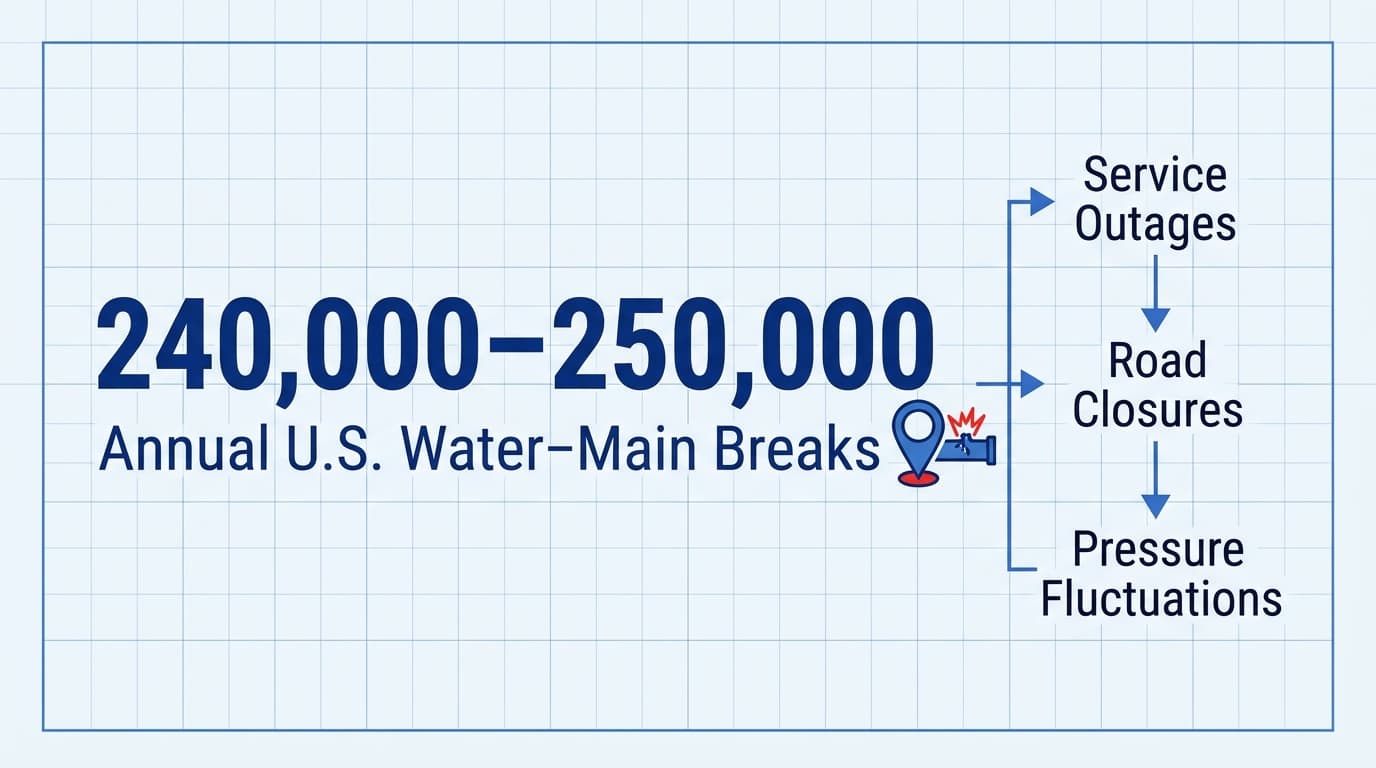
- 250,000 breaks per year - The estimated annual number of U.S. water-main breaks shows how often public water systems experience failures.
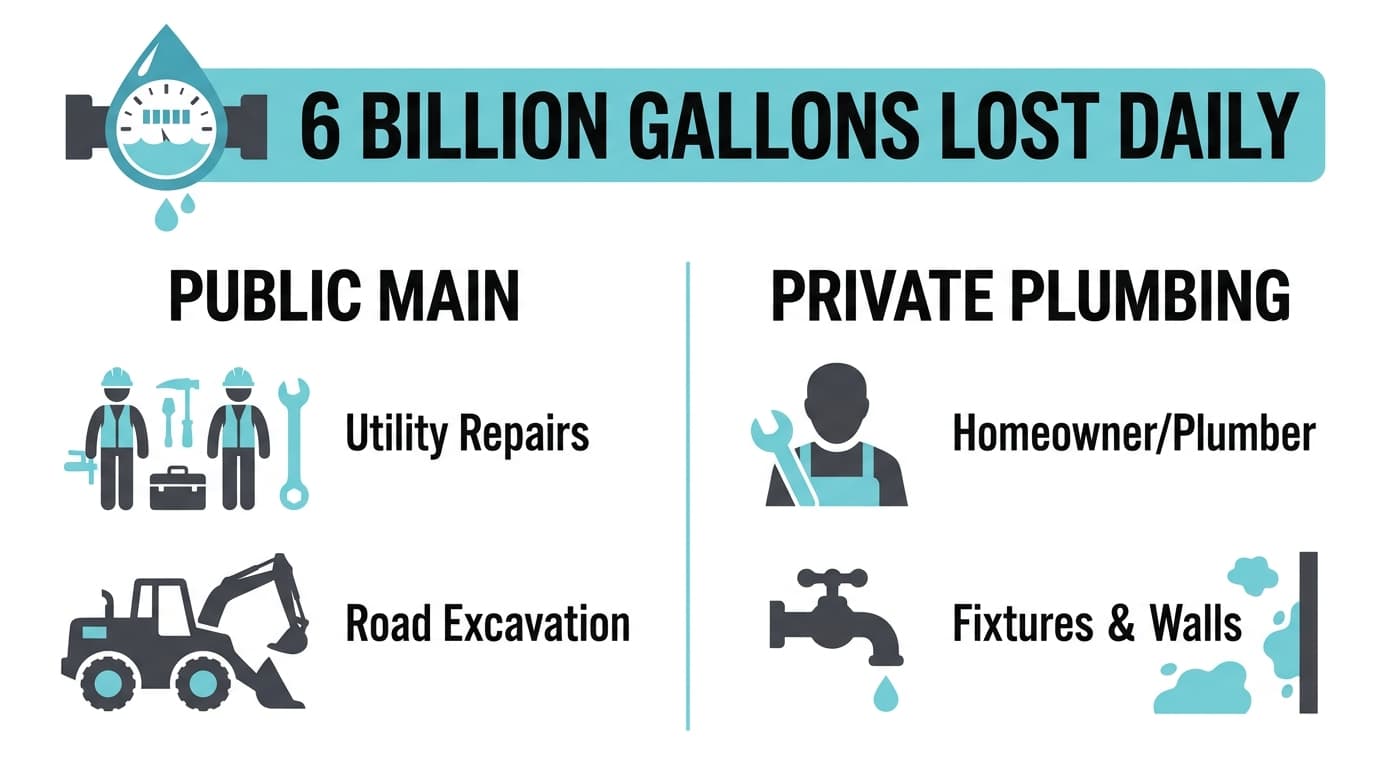
- 6 billion gallons daily - ASCE estimates that leaking pipes cause this volume of treated drinking water to be lost each day.
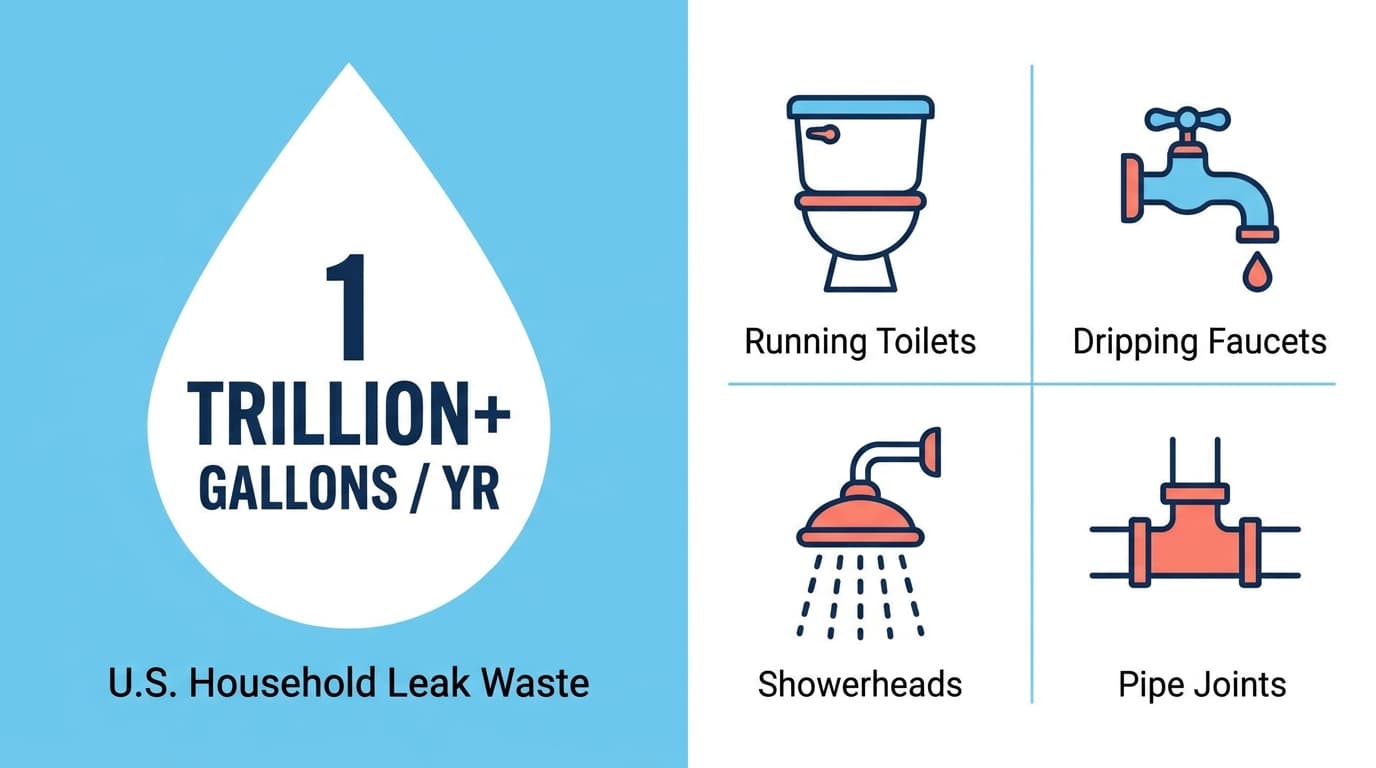
- More than 1 trillion gallons annually - EPA WaterSense estimates that household leaks waste more than this amount of water nationwide each year.
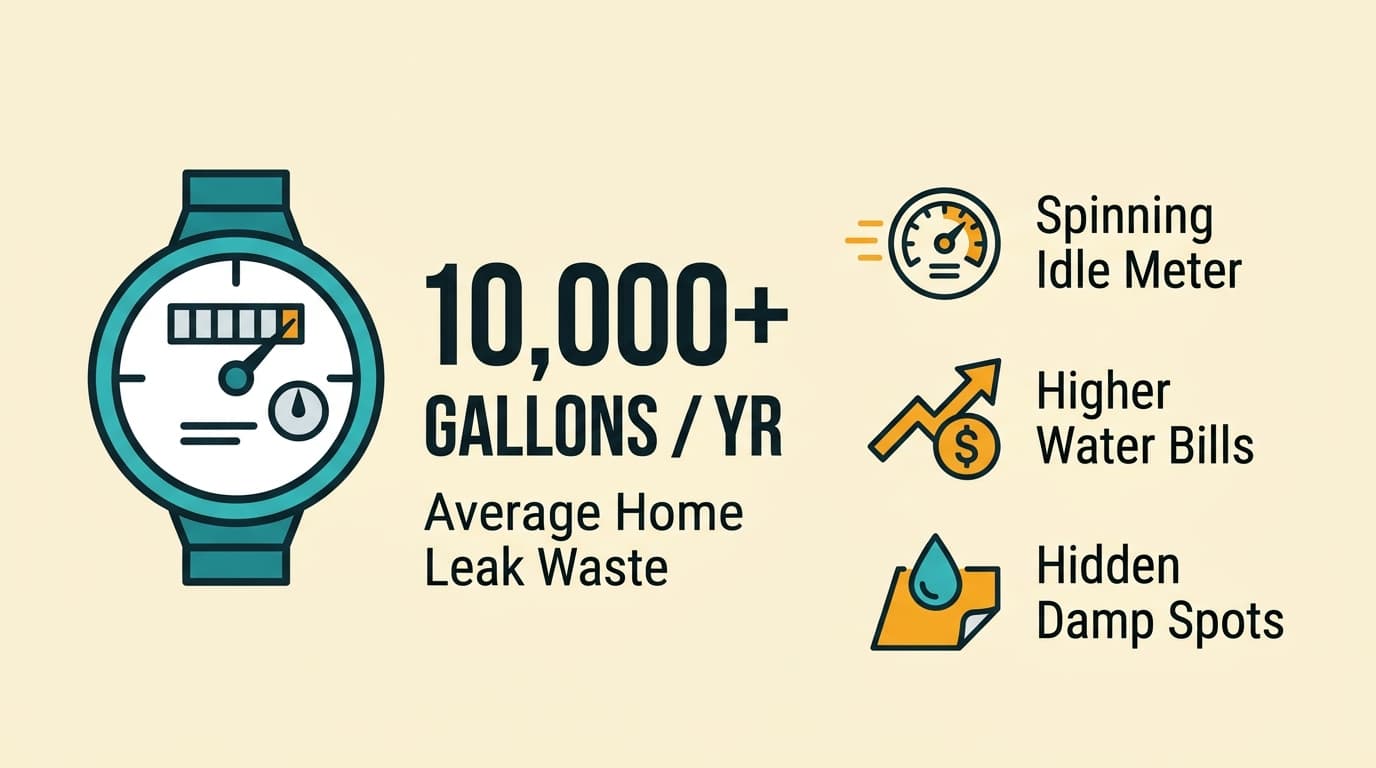
- More than 10,000 gallons annually - The average household can waste this much water each year through leaks.
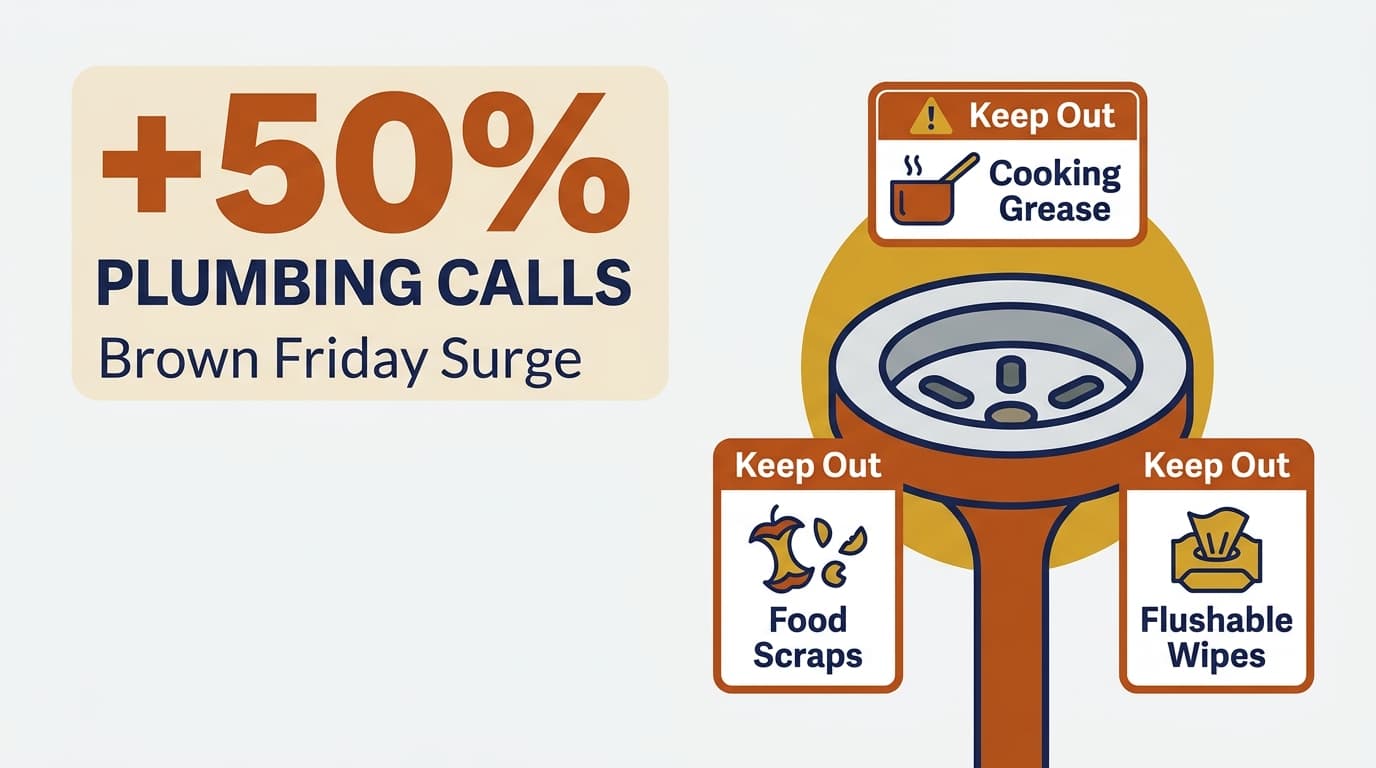
- 50% increase - Roto-Rooter reports about 50% more plumbing service calls on the day after Thanksgiving than on an average Friday.
What Happened During the 1 Water-Main Break Near U.S. 98?
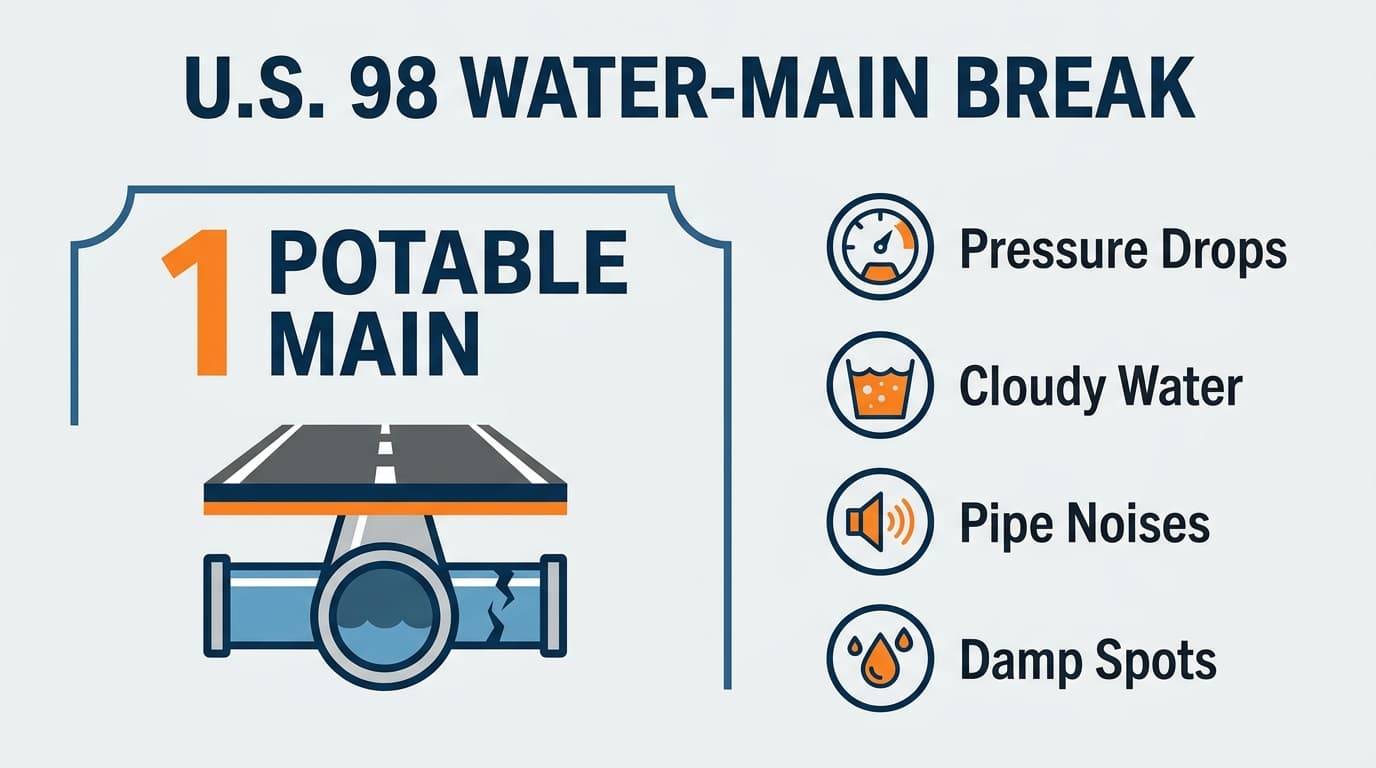
Polk County Utilities reported one potable water-main break beneath U.S. 98 near Gibsonia Galloway Road in Lakeland.
On November 10, 2026, Polk County Government reported the break and the work needed to repair the damaged public water line. The location placed the incident along a major road used by Lakeland residents and businesses.
A potable water main carries treated water through the public distribution system. When one breaks, utility crews may need to isolate the affected section, control water flow, and access the pipe before repairs can begin.
After a nearby water-line failure, homeowners should watch for:
- Unexpected water interruptions.
- Changes in household water pressure after service returns.
- Discolored or cloudy water.
- Unusual sounds around plumbing fixtures.
- Damp areas near pipes, walls, or floors.
These signs do not automatically mean a private pipe has failed. Contact Polk County Utilities about public water-service concerns and a licensed plumber about suspected problems inside the property.
Why Did the Water-Main Break Cause a Partial U.S. 98 Roadway Closure?
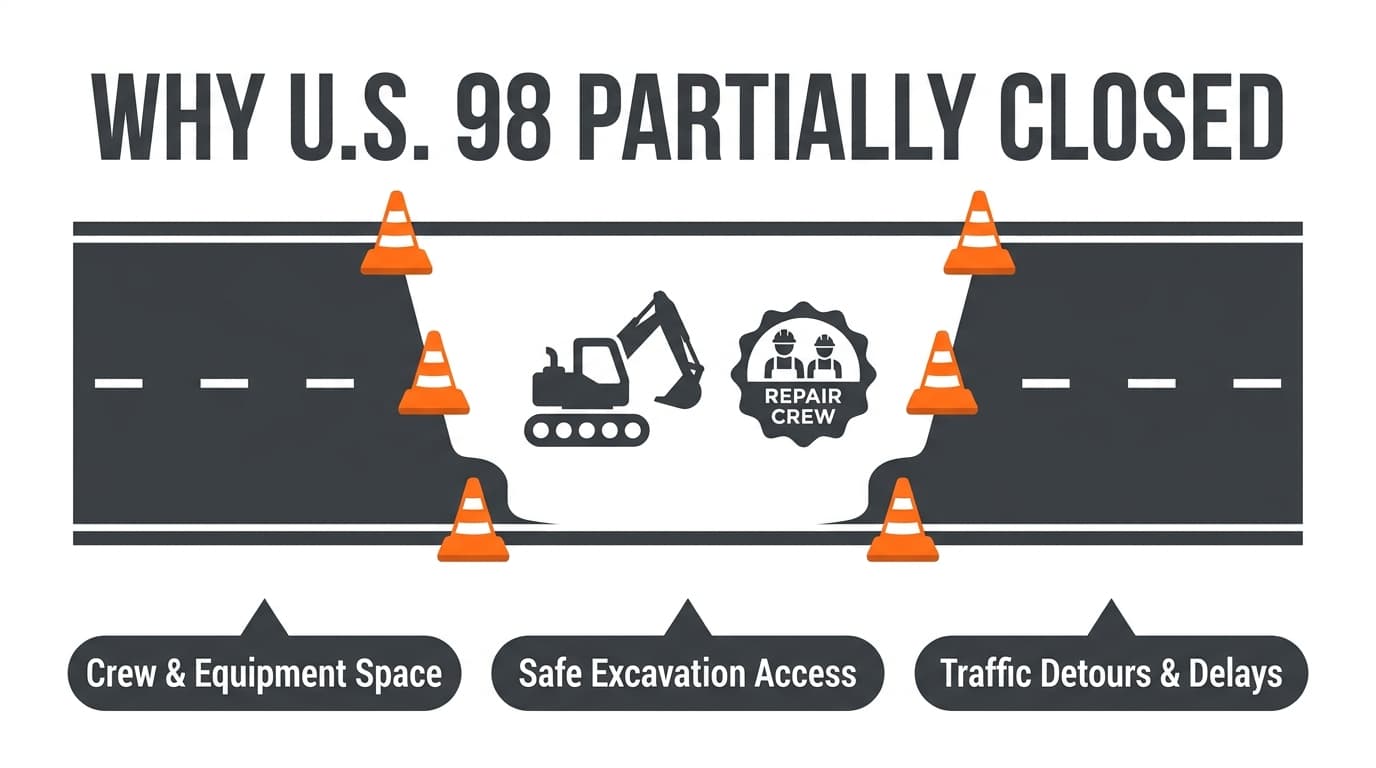
Crews needed access to the affected area, requiring a partial closure of U.S. 98 while they repaired the water main. The roadway disruption shows how a public water-line failure can affect more than water service. Utility repairs may require workers, equipment, and excavation space near the damaged section.
For homeowners and businesses near U.S. 98, the closure could mean:
- Temporary changes to regular travel routes.
- Restricted access near the repair site.
- Delays for customers and delivery vehicles.
- Questions about water-service interruptions during the work.
- A need to follow utility updates before assuming service has returned to normal.
A road closure does not establish that nearby private plumbing has been damaged. It indicates that crews needed access to the public infrastructure.
Residents should follow Polk County Utilities updates for information about the municipal system. If household plumbing continues to show unusual symptoms after the public repair, a separate inspection can help identify the cause.
What Does a Repair Completed Within 1 Day Tell Lakeland Homeowners?
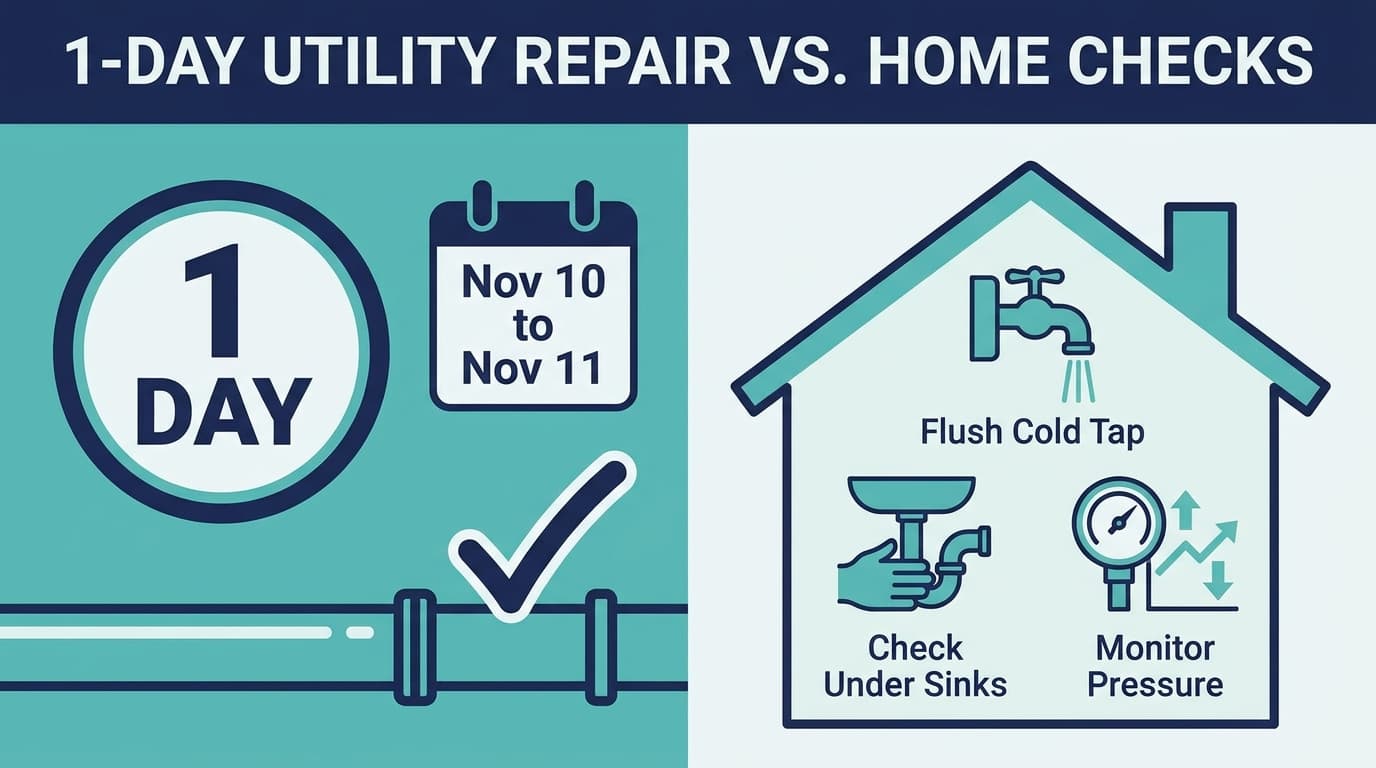
Polk County Utilities completed the reported repair and reopened the affected section of U.S. 98 the following day. The county reported that crews completed the work within 1 day, with the affected road section reopening on November 11, 2026. A prompt repair can reduce the length of a public disruption and restore normal utility operations.
However, restoring a municipal water main does not confirm that every connected property has normal plumbing conditions. A homeowner may still notice pressure changes, trapped air, or discolored water after service resumes. These symptoms can have several causes and do not necessarily indicate a damaged private pipe.
After service returns, homeowners can take a few basic steps:
- Run cold water according to the utility’s instructions if the water appears cloudy or discolored.
- Check whether water flows normally from household fixtures.
- Look beneath sinks and around water heaters for visible leaks.
- Monitor pressure for persistent changes.
- Contact the utility if water-quality concerns remain.
If household plumbing problems continue, a licensed service technician can investigate the private system. A municipal repair does not automatically mean a home needs repiping or a full system upgrade.
Why Did ASCE Give U.S. Drinking-Water Infrastructure a C- Grade?
The American Society of Civil Engineers (ASCE) gave drinking-water infrastructure a C- in its 2025 Infrastructure Report Card. The grade reflects the condition and performance of systems across the country, not the condition of every local utility.
Aging pipes can become more vulnerable to leaks and breaks as materials deteriorate. Some older systems also need upgrades to handle changing demand and more severe weather.
ASCE identifies several ongoing challenges:
- Aging water mains and service lines.
- Maintenance and replacement backlogs.
- Water loss through leaks.
- Exposure to corrosive soil and environmental conditions.
- Funding needs for treatment and distribution systems.
The Lakeland incident is one example of the work public utilities must handle when a water main fails. However, the national grade should not be treated as a rating of Polk County Utilities specifically. Homeowners should use local utility notices for information about their own service.
Why Does the U.S. Need $625 Billion in Drinking-Water Infrastructure Investment?
The $625 billion estimate comes from the U.S. Environmental Protection Agency’s assessment of drinking-water infrastructure needs, as reported by ASCE. It covers the investment required to maintain and improve systems that deliver treated water to homes and businesses.
Public water systems depend on more than underground pipes. They also need treatment facilities, storage tanks, pumps, and distribution equipment. Each part requires regular maintenance and eventual replacement.
The investment estimate reflects several priorities:
- Replacing aging water mains and service lines.
- Repairing leaks and reducing water loss.
- Updating treatment and distribution facilities.
- Maintaining reliable service as communities grow.
- Addressing water-quality and infrastructure concerns.
This is a national estimate, not Polk County’s individual funding requirement. Still, the U.S. 98 break shows why investment in public water systems matters to local residents and businesses.
How Do 250,000 Water-Main Breaks per Year Affect U.S. Communities?
ASCE has cited an estimated 250,000 to 300,000 water-main breaks per year in the United States. Its 2025 drinking-water report card gives a more recent estimate of approximately 240,000 breaks annually, indicating that the older 250,000 figure is a rounded benchmark rather than an exact current count.
Water mains operate underground, where age, soil conditions, corrosion, and material wear can affect their condition. A failure may require utility crews to isolate the damaged section and repair or replace the affected pipe.
A public water-main break can lead to:
- Temporary water-service interruptions.
- Road closures and excavation work.
- Water loss before crews isolate the line.
- Changes in pressure during repairs.
- Additional work to restore the affected area.
The national estimate does not predict how often Polk County will experience a break. It does show why homeowners should know which problems belong to the public utility and which require attention inside their own properties.
Why Does the U.S. Lose 6 Billion Gallons of Treated Water Every Day?
ASCE reports that the United States loses approximately 6 billion gallons daily through leaking water infrastructure. This water has already gone through treatment before it escapes from distribution systems.
The loss affects more than the available water supply. Utilities also lose the resources used to treat, pump, and distribute that water. Finding and repairing leaks can therefore reduce waste and help control operating costs.
Public infrastructure leaks and household leaks require different responses:
| Public water infrastructure | Household plumbing |
|---|---|
| Leaks occur in municipal distribution systems. | Leaks occur in private pipes, fixtures, and appliances. |
| Problems may affect roads and public service. | Problems may affect floors, walls, and water bills. |
| The local utility investigates and repairs the main. | The homeowner or a licensed plumber investigates the private system. |
| Repairs may require road access or excavation. | Repairs may involve fixtures, supply lines, or repiping. |
Homeowners cannot repair municipal water mains themselves. They can, however, monitor their own plumbing and arrange repairs when they find signs of a leak.
How Do Household Leaks Waste More Than 1 Trillion Gallons Annually?
EPA WaterSense estimates that household leaks waste more than 1 trillion gallons of water across the United States each year.
The U.S. Environmental Protection Agency’s WaterSense program draws attention to the cumulative effect of leaks in homes. A dripping faucet may seem minor, but leaks from toilets, showerheads, and pipe connections can continue for weeks or months if nobody notices them.
Common household sources include:
- Running toilets.
- Dripping faucets.
- Leaking showerheads.
- Loose or damaged pipe connections.
- Appliance supply-line leaks.
These problems differ from municipal water-main breaks, but both contribute to unnecessary water loss. A homeowner may not see a leak immediately if it occurs behind a wall, beneath a floor, or near an appliance.
Check fixtures regularly and investigate unexplained increases in water use. If a leak is difficult to locate, a plumbing professional can use suitable leak-detection methods to identify the source. The EPA’s archived WaterSense guidance provides the background for its household leak estimate.
How Can More Than 10,000 Gallons of Annual Household Water Waste Affect Your Home?
Leaks in an average household can waste more than 10,000 gallons of water each year. EPA WaterSense guidance estimates that household leaks can waste more than 10,000 gallons annually.
That amount can build up through several small leaks or one persistent plumbing problem. The figure is an average estimate, not a prediction of how much every Lakeland home will lose.
Some leaks are easy to spot, while others remain hidden until a homeowner notices a higher bill or water damage. A simple check can help identify possible problems before they continue.
Look for these warning signs:
- A water meter that keeps moving when all fixtures are off.
- A toilet that refills without being flushed.
- Damp spots around plumbing connections.
- Unexplained changes in water bills.
- Persistent dripping or running-water sounds.
If you suspect a hidden leak, a licensed plumber can investigate the system and recommend a suitable repair. Early attention may help prevent continued water waste and damage to nearby materials.
Why Do Plumbing Calls Increase by 50% After Thanksgiving?
Roto-Rooter reports approximately 50% more service calls on the day after Thanksgiving than on an average Friday.
The day after Thanksgiving is often called Brown Friday in the plumbing industry. Roto-Rooter’s service data shows a 50% increase in incoming calls compared with an average Friday. The company attributes the surge to heavier household use during Thanksgiving gatherings.
More guests can mean more cooking, dishwashing, showers, toilet use, and laundry. These activities place extra demand on drains and plumbing fixtures, especially in homes that already have slow drains or older pipes.
Common trouble spots include:
- Kitchen sinks handling extra food waste.
- Garbage disposals receiving unsuitable scraps.
- Toilets experiencing heavier use.
- Drains affected by grease and food debris.
- Older sewer lines struggling with existing blockages.
Homeowners can reduce avoidable problems by keeping cooking grease, oils, and food scraps out of drains. They should also avoid flushing wipes and other unsuitable materials. If a drain is already slow, arrange drain cleaning before a holiday gathering rather than waiting for a backup.
What Should Lakeland Homeowners Check After a Local Water-Main Break?
Homeowners should monitor water appearance, pressure, plumbing connections, and signs of leaks after public service returns.
The U.S. 98 incident is a useful reason to review household plumbing after a nearby water-line failure. A public water-main break does not automatically damage private pipes, but homeowners should pay attention to changes that continue after the utility completes its work.
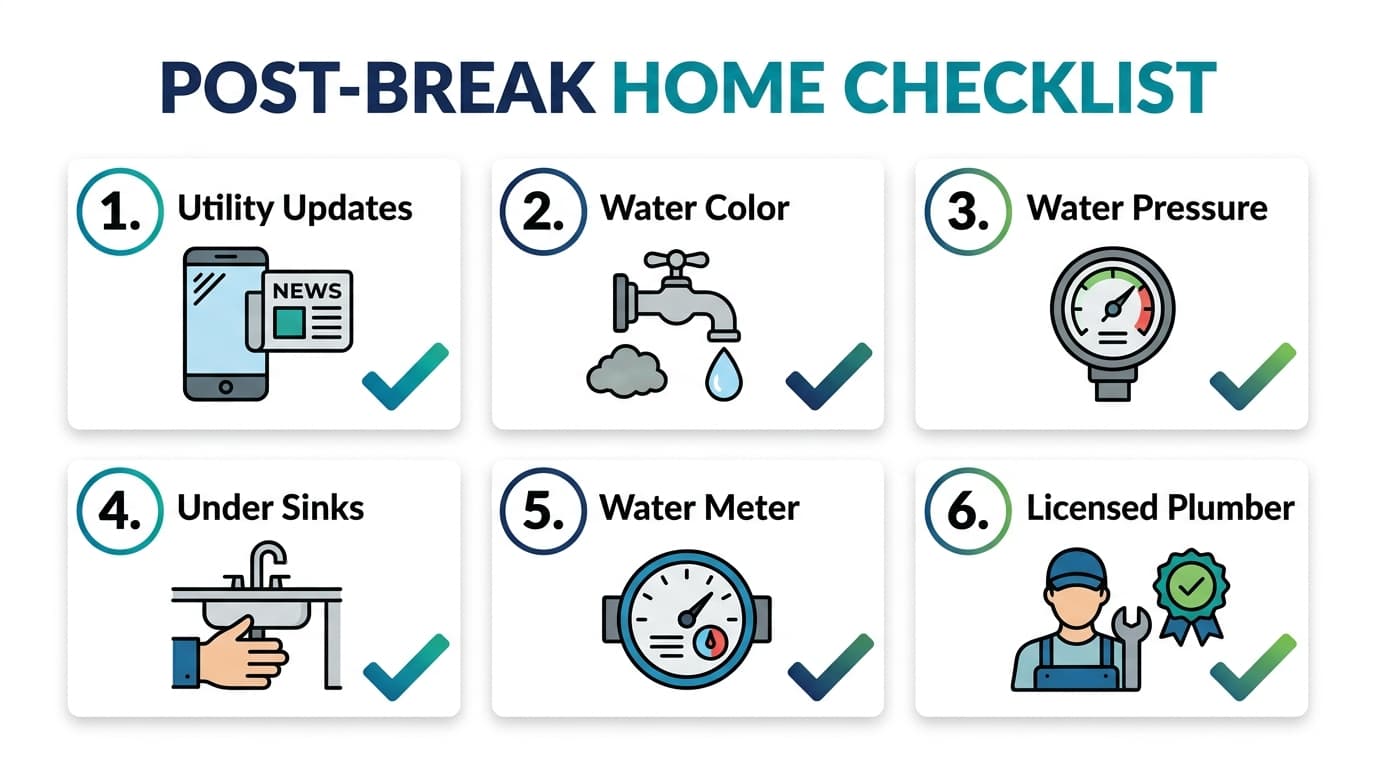
Use this checklist after an outage or pressure change:
- Follow utility updates. Check Polk County Utilities announcements for repair information and any instructions about water use.
- Check the water appearance. If water looks discolored, follow the utility’s guidance before using it for drinking or cooking.
- Monitor water pressure. Notice whether pressure remains unusually low or fluctuates after service returns.
- Inspect visible plumbing. Look beneath sinks, around water heaters, and near appliance connections.
- Check the water meter. If all fixtures are off but the meter continues moving, investigate a possible leak.
- Call a licensed plumber. Arrange an inspection if unusual symptoms persist or you suspect a hidden leak.
The source of a problem matters. A utility handles public water infrastructure, while a plumbing contractor investigates private pipes, fixtures, and household connections.
FAQ
What Should You Do First When You Notice a Water Leak at Home?
When you find a leaking pipe, close the nearest fixture valve. If you cannot stop the leak, turn off the main water supply. Move furniture and valuables away, and place a bucket under the leak. Keep water away from electrical outlets. Contact a plumbing service in Lakeland or Polk County, and explain which pipe is leaking and how water is spreading.
Why Do My Drains Keep Clogging After Cleaning?
A drain that clogs repeatedly may contain grease, hair, or other buildup beyond the visible opening. A damaged pipe or blocked sewer line can also cause recurring problems. Avoid pouring chemical cleaners into a standing drain.
Note which sinks, tubs, or toilets are affected. A technician can inspect the line and recommend drain cleaning or sewer repairs before choosing a repair.
What Should I Ask Before Booking a Plumbing Repair Service?
Before booking plumbing services, explain which fixture or pipe needs attention and describe the symptoms. Ask whether the service call includes diagnosis, whether the technician will provide upfront pricing, and whether you must approve the repair before work begins.
Confirm the expected arrival window and any emergency fees. These details help you understand the cost and scope before work starts.
When Should I Call a Technician About Water Heater Problems?
If your water heater stops producing hot water, check its power supply or thermostat settings only if you can do so safely. Do not open electrical panels or attempt gas repairs. Call a technician if the unit leaks, makes popping sounds, or produces a burning smell. The technician can identify the fault and explain whether repair or replacement is needed.
Should I Check My Plumbing Before a Bathroom or Kitchen Remodel?
Before starting a bathroom or kitchen remodel, ask a plumber to inspect the existing pipes and water supply. New fixtures, added rooms, or relocated sinks may require new connections or hot and cold water repipes.
Discuss fixture installation, pipe replacement, and permit requirements before construction begins. Early planning can prevent opening finished walls to correct plumbing problems and confirm the schedule.
Protect Your Lakeland Home After a Water-Main Break
A water-main break can interrupt your daily routine and leave you unsure whether your home’s plumbing has been affected. The problem is bigger than one local incident. An estimated 240,000 to 250,000 water-main breaks occur each year across the U.S., with around 6 billion gallons of water lost daily.
You can’t prevent every public water-system failure, but you can check your private plumbing for leaks or pressure changes. If water is surfacing between the meter and your home, you can request a private water line repair. If you suspect a problem, True Plumbers & AC can help with leak detection, plumbing repairs, or an inspection. Contact the team to discuss what your home may need.