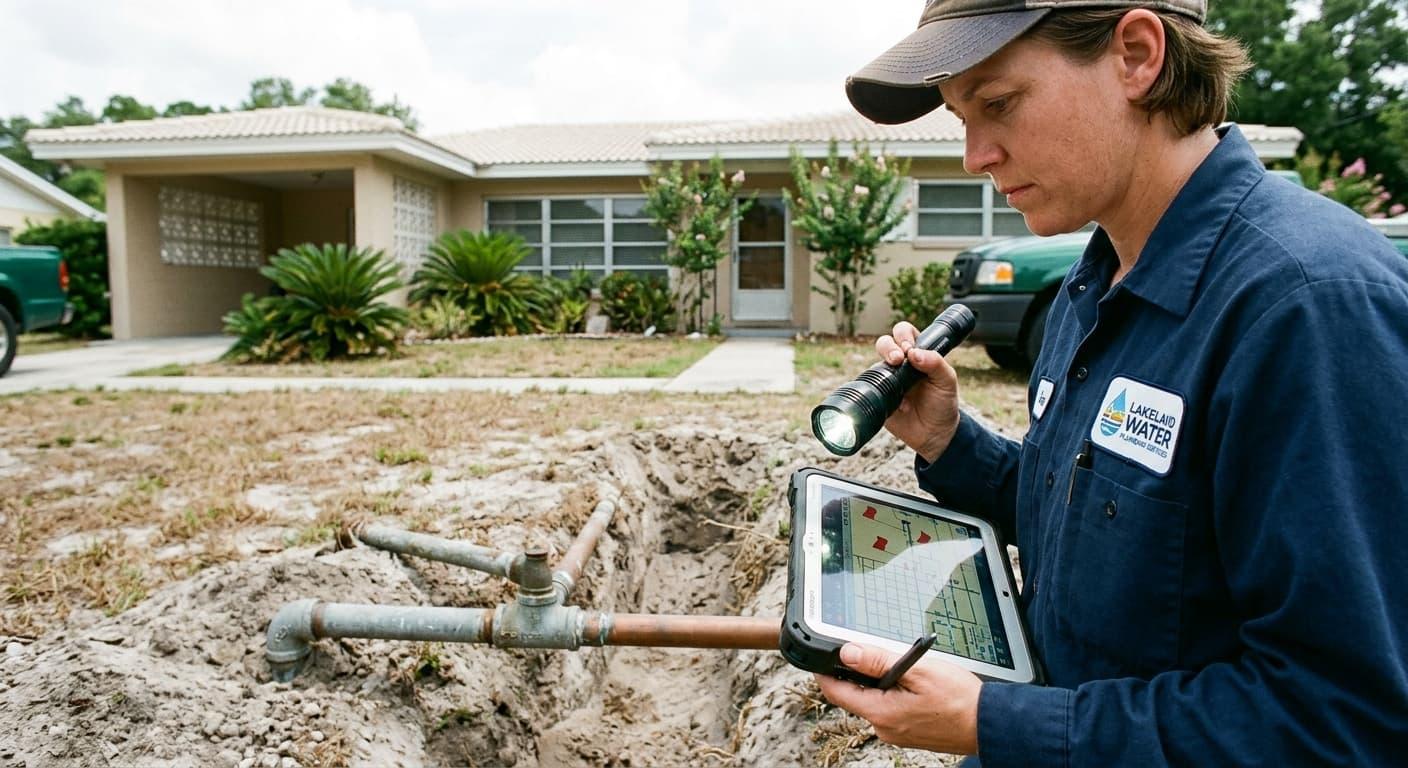
Lakeland’s lead pipe inventory issue affects 24,000 households, but the notices do not mean those homes have confirmed lead service lines. The City of Lakeland says the notices identify properties where service-line material is unknown. City of Lakeland pipe inventory information. This distinction matters because unknown plumbing material requires investigation, not automatic alarm. The following data explains what Lakeland homeowners should know and what the numbers actually show.
Lakeland’s Lead Pipe Crisis: Key Statistics on the Inventory
The supplied data shows that Lakeland’s situation sits inside a much larger national effort to identify aging drinking-water infrastructure and reduce lead exposure.
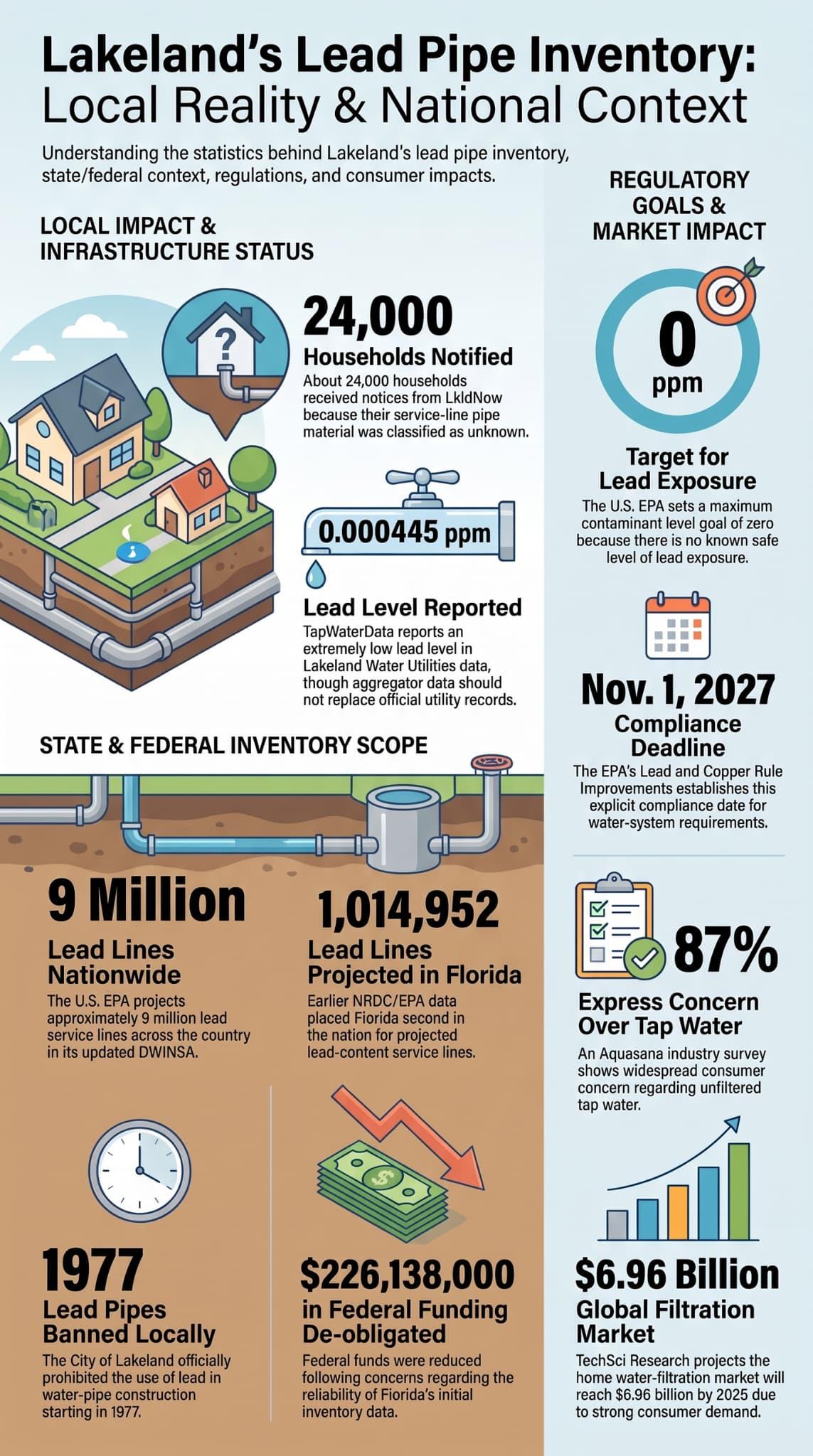
- 24,000 - LkldNow - About 24,000 Lakeland households received notices because their service-line material was unknown.
- 9 million - U.S. EPA - The EPA projected roughly 9 million lead service lines nationwide in its updated DWINSA.
- 1,014,952 - NRDC/EPA data - Florida’s earlier projection placed the state second nationally for projected lead-content service lines.
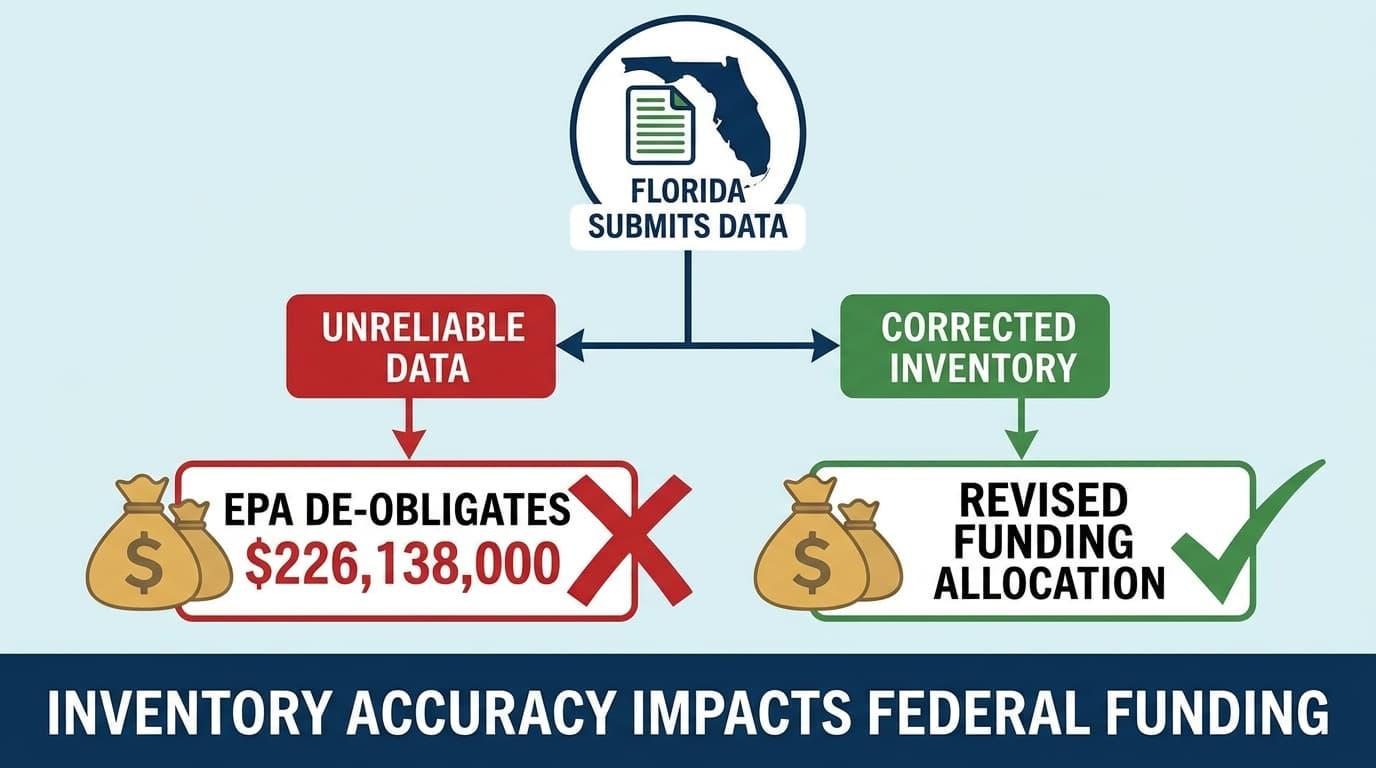
- $226,138,000 de-obligated - U.S. EPA - Federal funding was reduced after concerns about the reliability of Florida’s original inventory data.
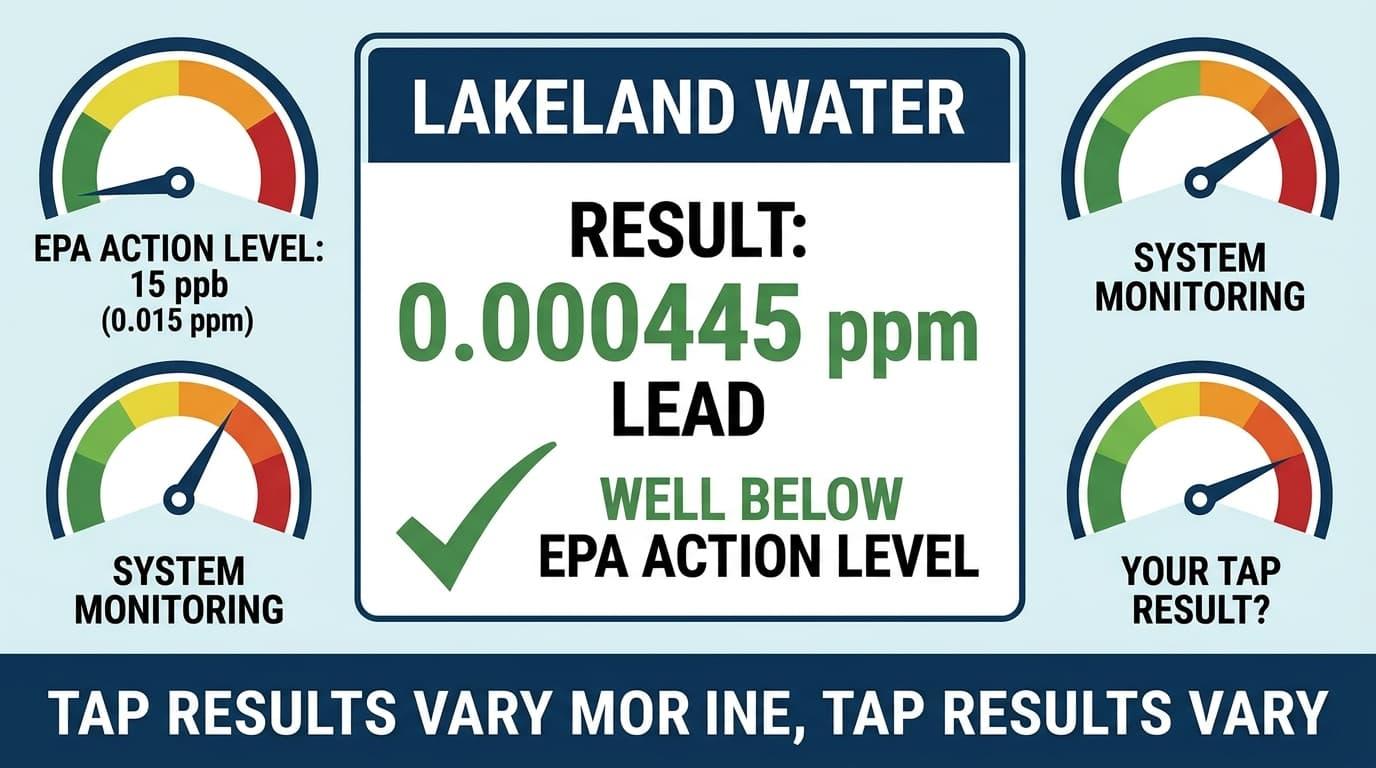
- 0.000445 ppm - Lakeland Water Utilities data via TapWaterData - The reported Lakeland lead result was extremely low, although the aggregator should not replace utility records.
- 0 ppm (zero) - U.S. EPA - EPA’s maximum contaminant level goal for lead is zero because it recognizes no safe level of lead exposure.
- 1977 - City of Lakeland - Lakeland prohibited lead in water-pipe construction beginning in 1977.
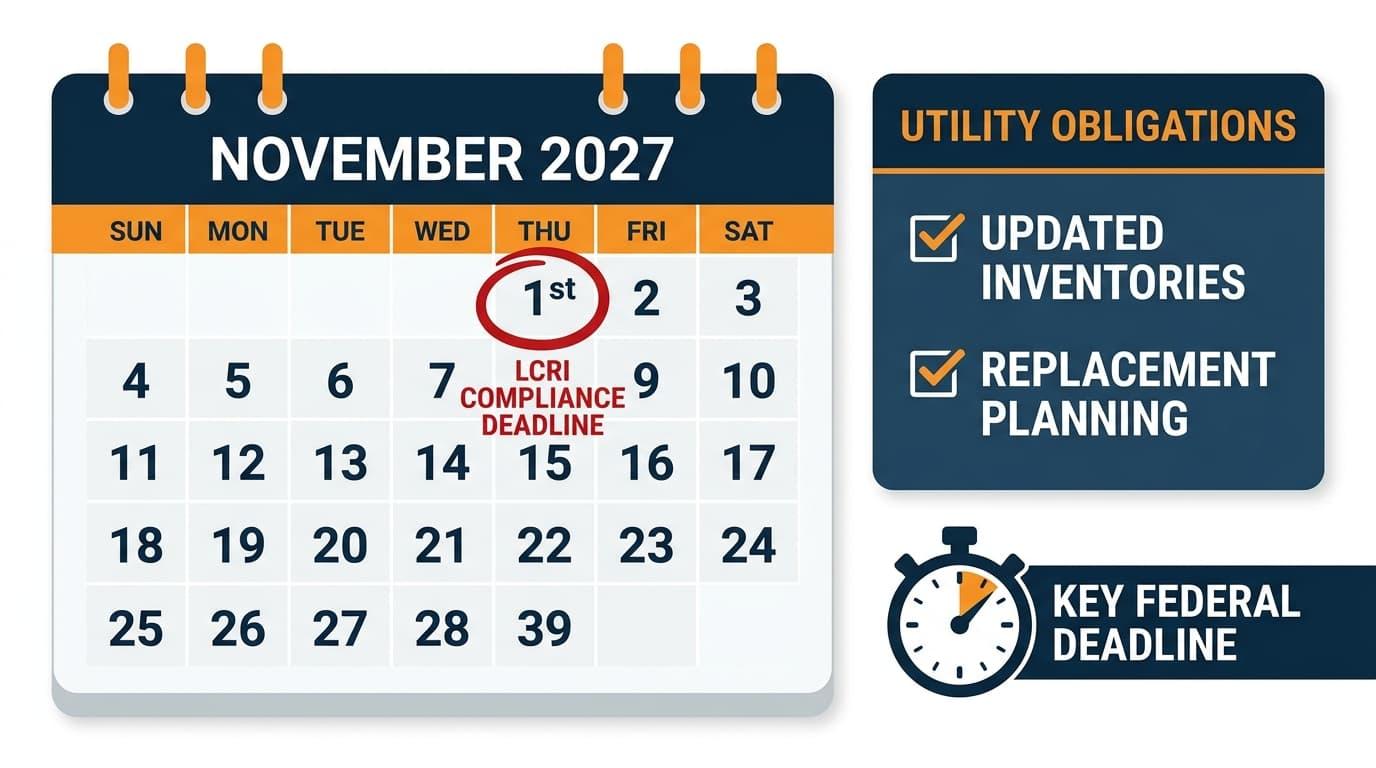
- Nov. 1, 2027 - U.S. EPA - The Lead and Copper Rule Improvements establishes this compliance date for water-system requirements.
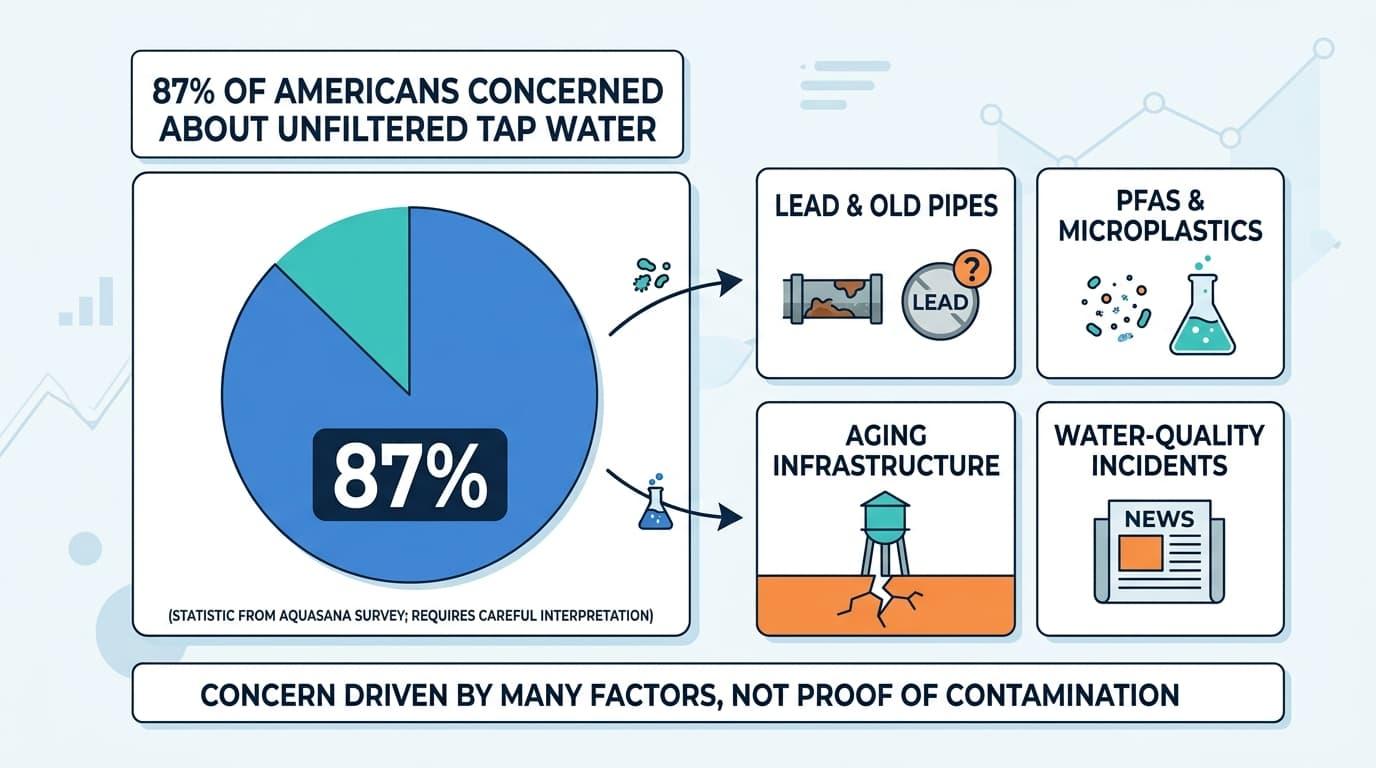
- 87% - Aquasana - The supplied survey statistic indicates widespread concern about unfiltered tap water, although the survey is industry-sponsored.
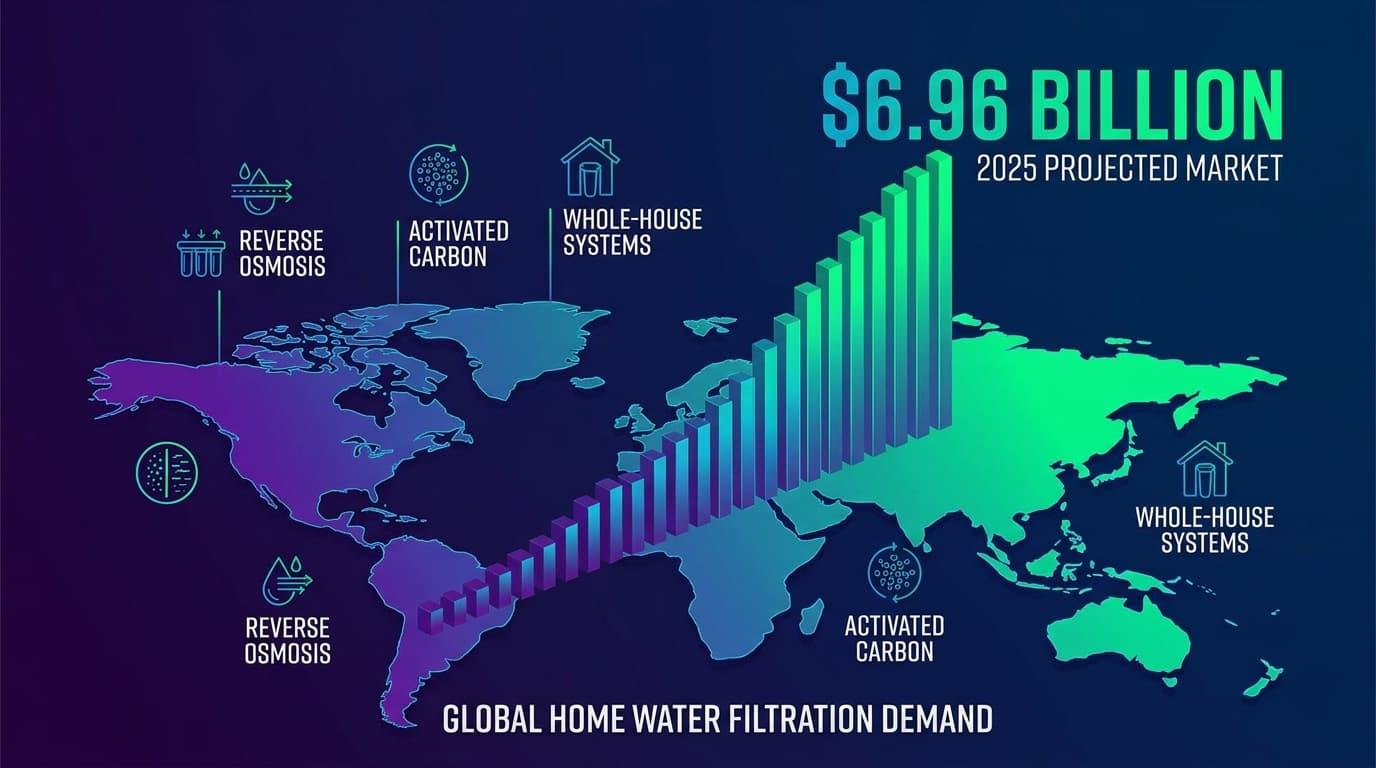
- $6.96 billion - TechSci Research - The projected 2025 global home water-filtration market shows strong consumer demand for filtration products.
Why Did Lakeland Notify About 24,000 Households About Unknown Service Lines?
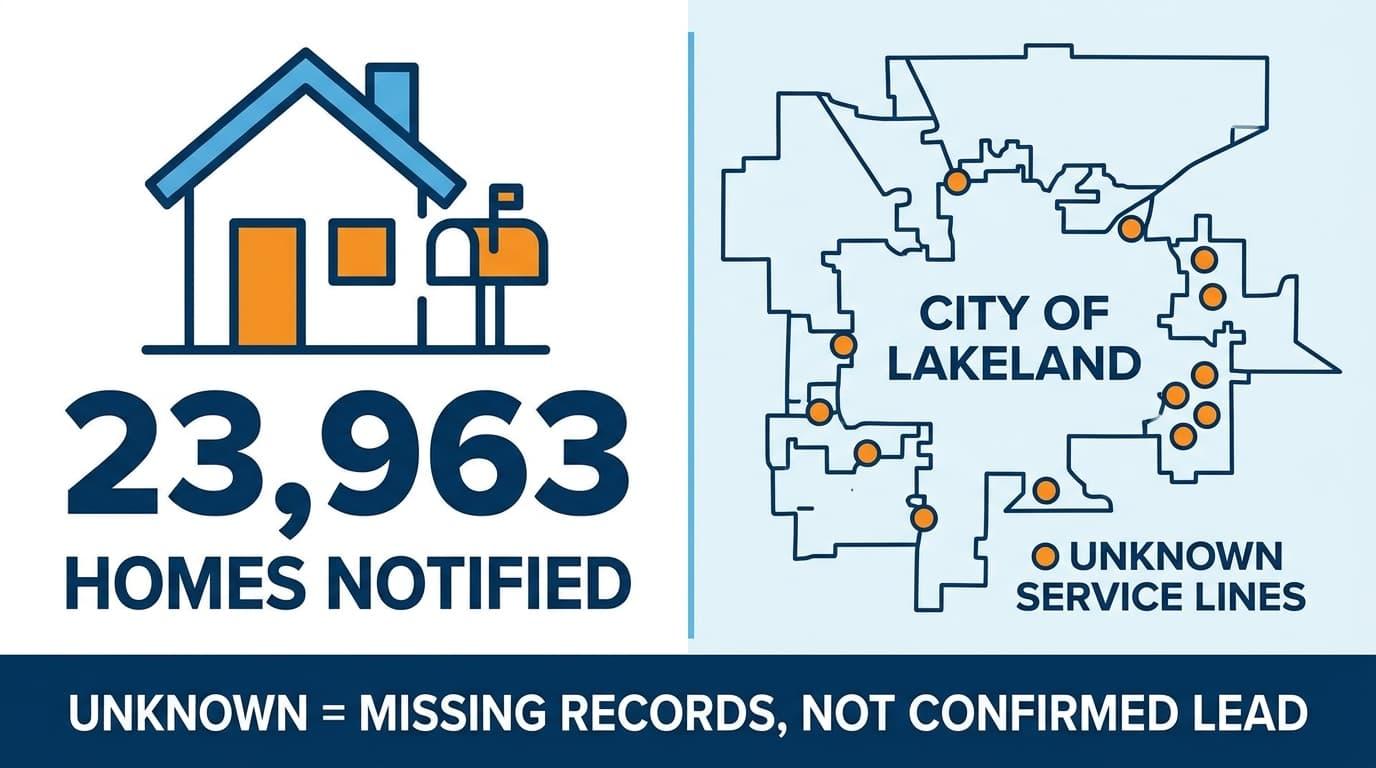
Missing service-line records, rather than confirmed lead pipes, triggered Lakeland’s household notifications. LkldNow reported that 23,963 homes received letters, while the City of Lakeland said it was working to identify unknown service-line materials.
The reason is largely historical. Older properties may have incomplete construction records, so utilities must review service-line materials under federal inventory rules.
Lakeland’s program focuses on identifying lead and galvanized service lines. The city has said it has not identified lead service lines through the inventory work linked to these notices. So, “unknown” is an information gap, not a diagnosis.
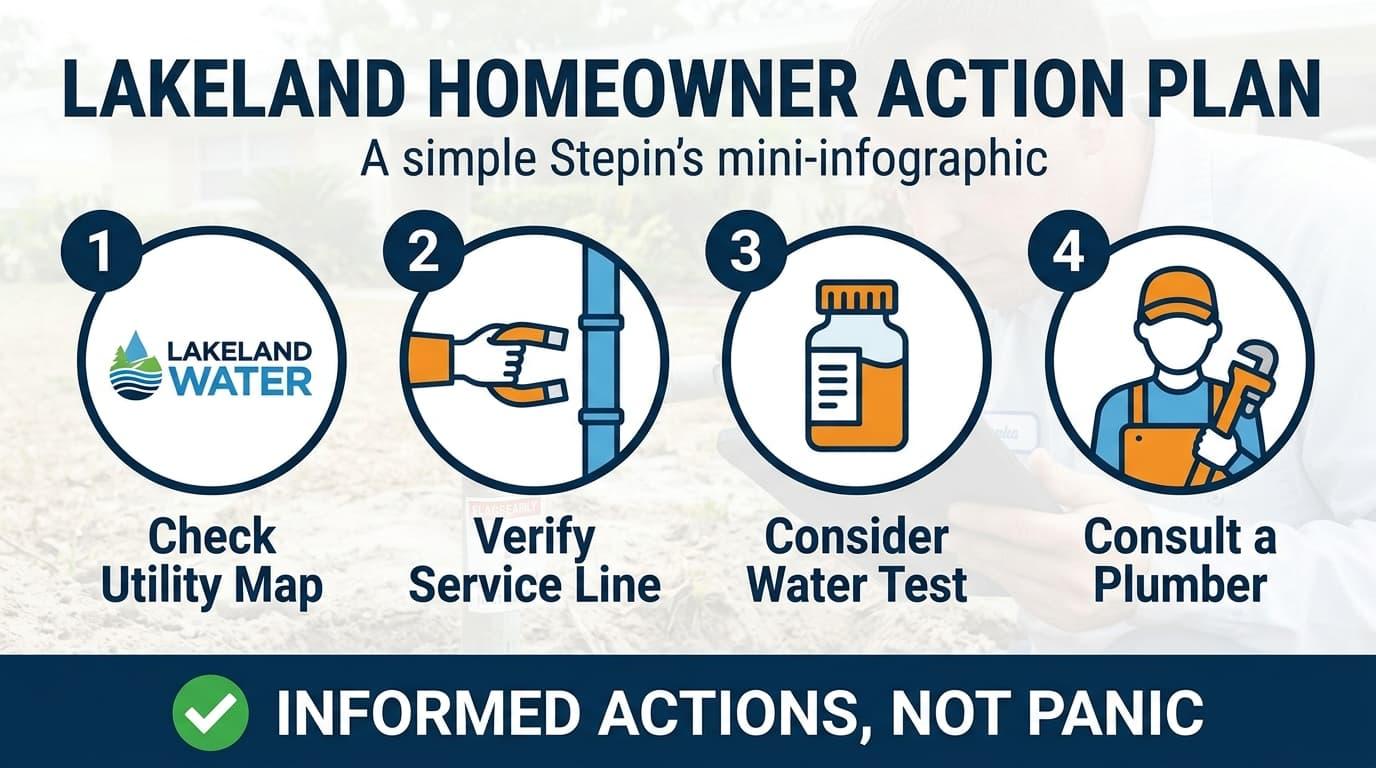
For homeowners, that means they can:
- Check service-line records with the utility.
- Look at the line entering the home.
- Use basic identification methods as clues.
- Consider water testing if needed.
- Ask a qualified plumber for help.
The City of Lakeland also provides an inventory map and homeowner guidance. The process can take time because thousands of properties require review.
What Does an Unknown Service Line Actually Mean?
An unknown line means records do not confirm whether it is lead, galvanized steel, copper, plastic, or another material. It does not mean lead was detected.
That matters in Lakeland, Florida, where home ages vary. A pre-1977 home may need closer review, but its construction date cannot identify the pipe.
Other plumbing parts can matter too. Lead solder, older brass fixtures, connectors, and interior plumbing may affect exposure even if the service line is not lead. A professional assessment can review the wider plumbing system.
What Does the 9 Million U.S. Lead-Service-Line Estimate Reveal?
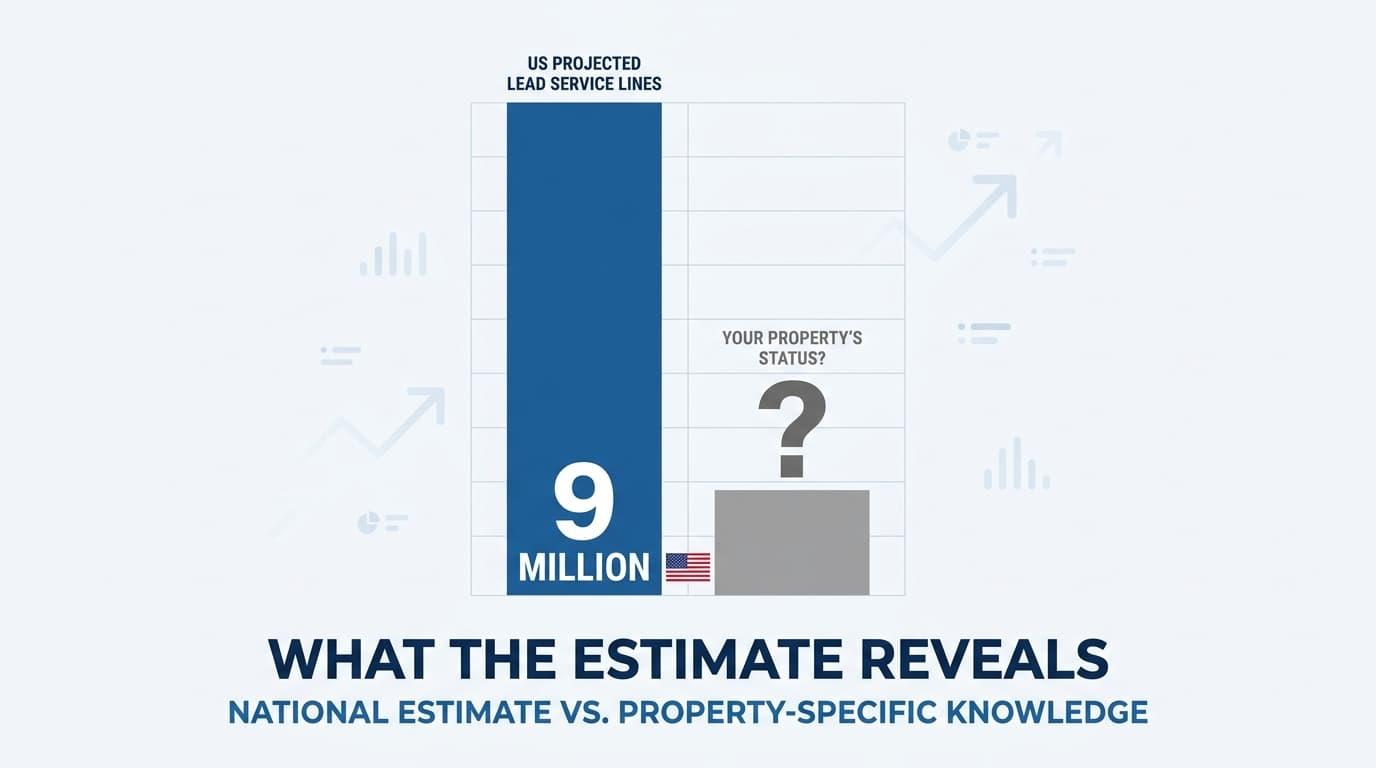
The 9 million estimate shows why service-line inventories became a national infrastructure priority. In 2024, the EPA said its updated DWINSA projected approximately 9 million lead service lines across the country.
That puts Lakeland’s notices in a wider context. Communities across the U.S. are dealing with incomplete records, aging infrastructure, and older plumbing.
The EPA requires inventories so utilities can identify service-line materials, communicate with affected properties, and plan replacement work. But a national estimate cannot tell a homeowner what is inside one Lakeland property.
An inventory traces the water path from the public system to the tap. That can include the utility service line, private service line, interior pipes, fixtures, valves, and other plumbing components.
So homeowners with older residential plumbing may need to look beyond the service line. Leaks, fixture materials, hot and cold water lines, and older connections can also matter.
Inventory data is only as reliable as the records behind it. Florida’s experience shows why accurate property-level information matters.
Why Does Florida Have 1,014,952 Projected Lead-Content Service Lines?
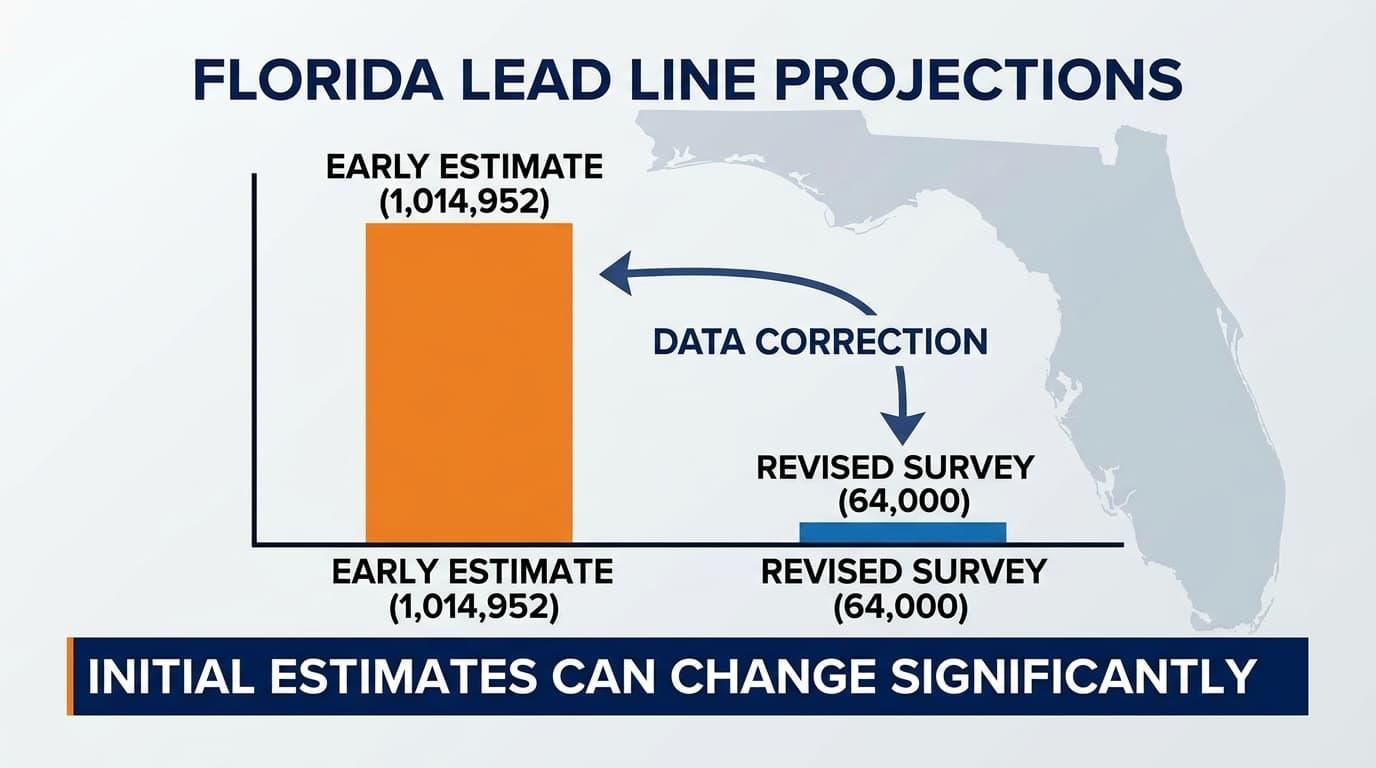
Florida’s earlier projected total of 1,014,952 lead-content service lines placed the state second nationally, but later federal review substantially changed the picture. NRDC’s analysis of EPA data listed Florida behind Illinois in the original projection.
The number became controversial because the EPA later determined that Florida’s original DWINSA reporting was unreliable. That does not mean every Florida homeowner faced a lead-pipe problem. It means the original statewide projection was not a dependable measure of confirmed household conditions.
| Data point | Supplied figure | What it means |
|---|---|---|
| U.S. projected lead service lines | 9 million | National infrastructure scale |
| Florida projected lead-content lines | 1,014,952 | Earlier statewide projection |
| Lakeland notified households | 24,000 | Local scale of unknown material notices |
| Later Florida projected count | 64,000 | Revised figure based on surveyed-system inventory data |
Florida’s correction is useful because it shows the difference between projected infrastructure estimates and verified inventory information.
For Polk County homeowners, statewide statistics should therefore be treated as context rather than property-specific evidence. A homeowner should not conclude that a house contains lead simply because Florida once appeared near the top of a national projection.
Why Was $226,138,000 De-Obligated From Florida’s Lead-Pipe Funding?
The EPA de-obligated $226,138,000 because Florida’s original lead-service-line data was found unreliable for allocating federal replacement funds. The agency said its review found substantially lower projected counts after Florida submitted additional inventory information.
This is one of the most revealing numbers in the entire dataset.
Federal infrastructure funding depends partly on estimates of need. If a state reports too many potential lead service lines, its allocation can be larger than the underlying verified need. If the estimates are too low, communities may receive less assistance than required.
The EPA’s corrective action illustrates several pressures:
- Inventory accuracy affects funding.
- State reporting affects federal allocations.
- Initial projections can differ sharply from later records.
- Local utilities still need property-level inventories.
- Funding corrections do not prove individual homes are safe or unsafe.
The episode also explains why Lakeland’s notices should not be read as proof of widespread lead contamination. The federal inventory process is designed to replace uncertainty with better records.
What Does the Inventory Discrepancy Mean for Homeowners?
The Florida correction should make homeowners cautious about dramatic statewide claims. A large estimate can attract attention, but it may not represent confirmed pipes.
That said, uncertainty still has value. An unknown service line tells a homeowner that the available evidence is incomplete. The reasonable response is verification.
A property owner can ask:
- Does the utility have a material classification for the service line?
- Is the private-side line documented?
- Was the property built before 1977?
- Are galvanized components present?
- Would water testing provide useful additional information?
That approach applies to both home and business owners. Commercial properties can have larger or more complicated plumbing networks, making records and professional inspection even more useful.
What Does Lakeland’s 0.000445 ppm Lead Result Actually Mean?
Lakeland’s reported 0.000445 ppm lead result is extremely low, but one utility-level result does not establish the lead level at every household tap. TapWaterData lists the result from Lakeland’s public water system and gives a testing date of September 29, 2025.
The figure converts to approximately 0.445 parts per billion, because 1 ppm equals 1,000 ppb. That is far below EPA’s current lead action level of 15 ppb under the framework cited in the supplied data.
The source deserves a qualification. TapWaterData is an aggregator that presents data sourced from public utility information. Homeowners should use official utility reports or certified laboratory testing when making property-specific decisions.
A low reported result can still coexist with uncertainty about individual plumbing. Lead can enter drinking water after water leaves a treatment facility if it encounters lead-containing plumbing materials.
That makes the sampling location important.
Why Can a Low Water Result Still Prompt Questions?
A public-water result represents a monitoring program, not necessarily every kitchen faucet in Lakeland. Household conditions vary.
A property with old plumbing could have different contact materials, water-use patterns, stagnation periods, or fixture conditions. Leak detection, fixture inspection, and water testing can therefore answer different questions.
Homeowners should avoid two opposite assumptions. A low result does not mean every possible source of lead has been ruled out. An unknown service line does not mean contamination has been found.
That middle position is the most useful one for practical plumbing services decisions.
Why Is the EPA’s Lead Goal 0 ppm When the Action Level Is 15 ppb?
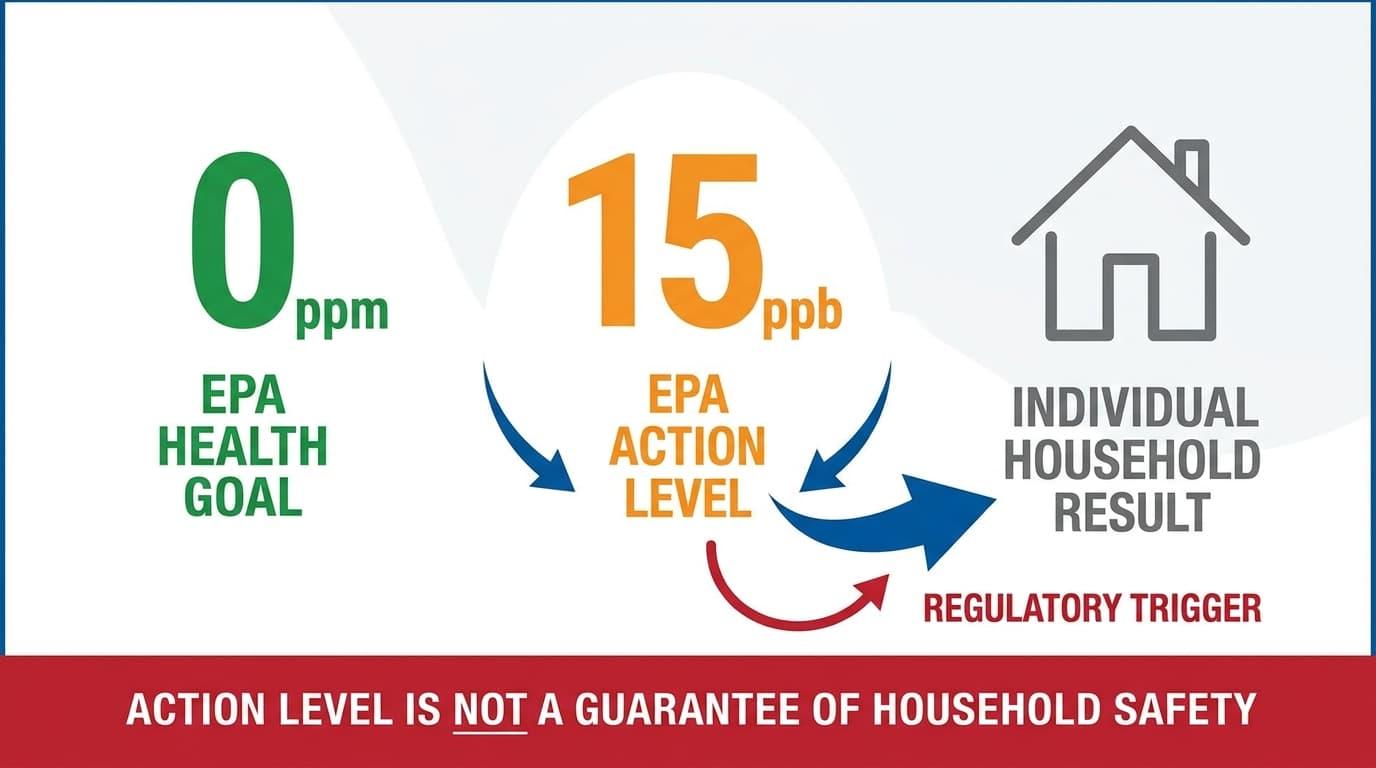
EPA’s maximum contaminant level goal for lead is 0 ppm because the agency recognizes no safe level of lead exposure, while the 15 ppb action level is a regulatory trigger rather than a guarantee of household safety.
This distinction is easy to miss.
The EPA explains that the lead action level is used to determine when a water system must take additional actions. It is not a household threshold that says water below that number is risk-free. The agency currently states that the MCLG for lead is zero.
That creates three different concepts:
- 0 ppm: EPA’s health-based maximum contaminant level goal.
- 15 ppb: The action level referenced in the supplied data and current EPA guidance for the existing framework.
- Individual household result: A measurement that may depend on the property, fixture, plumbing materials, and sampling conditions.
The difference matters because homeowners can misunderstand the phrase “below the action level.” Being below an action level does not establish that every source of lead exposure has been eliminated.
What Should Homeowners Do With That Difference?
Homeowners should use the distinction as a reason for better information, not panic.
If a property has an unknown service line, an older plumbing system, or visible signs of aging, testing can provide evidence that a general utility statistic cannot.
A certified laboratory can evaluate a household water sample. A qualified plumber can inspect accessible plumbing materials. A water-treatment professional can determine whether a filtration system is appropriate for the actual water concern.
For water heaters, fixtures, pipes, and treatment equipment, the solution should match the problem. Filtration is not automatically required because a property received an inventory notice.
Why Does Lakeland’s 1977 Lead-Pipe Rule Matter for Older Homes?
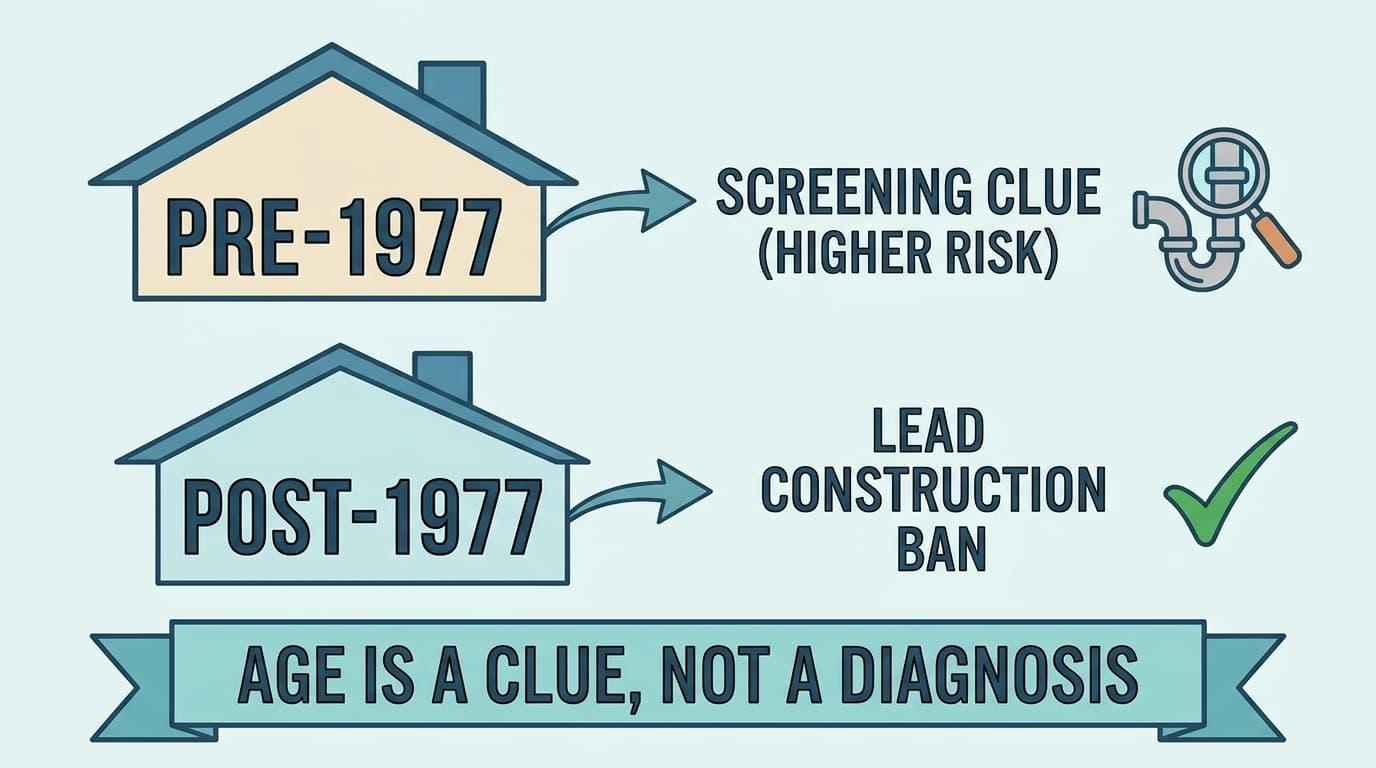
The 1977 construction cutoff gives Lakeland homeowners a useful historical marker, but a pre-1977 home does not automatically have lead plumbing. The City of Lakeland says it has prohibited lead in water-pipe construction since 1977.
That date helps explain why the city sent notices to older properties. Records may be incomplete for homes built before the prohibition, so the city needs to establish what materials are actually present.
Older homes can contain a mix of materials. A house might have copper supply lines but galvanized service piping, for example. Interior fixtures may also have different manufacturing dates.
The construction date should therefore be viewed as a screening clue.
| Home characteristic | What it tells a homeowner |
|---|---|
| Built before 1977 | More reason to verify service-line material |
| Built after 1977 | Lakeland’s lead-pipe construction ban provides useful context |
| Unknown service line | Material has not been confirmed |
| Confirmed non-lead line | Service-line lead concern is reduced |
| Older fixtures or solder | Other plumbing components may still deserve review |
The city’s inventory program uses historical information and physical inspection to improve classifications. That approach is stronger than relying only on a property’s construction year.
How Can Homeowners Identify Potentially Older Plumbing?
Lakeland has provided a simple homeowner method involving a magnet and a coin or screwdriver to help identify pipe material. LkldNow reported that residents can inspect the accessible service line, scratch the surface, tap it, and check whether a magnet sticks.
These methods are clues, not laboratory confirmation.
A homeowner who sees galvanized steel, cannot safely access the pipe, or remains uncertain can seek professional assistance. A service technician can document accessible materials and identify other plumbing issues that may affect water quality.
Why Is November 1, 2027 the Key LCRI Deadline?
EPA materials identify November 1, 2027 as the LCRI compliance date. November 1, 2027 is the federal compliance date for the Lead and Copper Rule Improvements, giving water systems a major deadline for updated inventories and replacement planning.
The deadline matters because the LCRI strengthens requirements around lead service lines and inventory information. Utilities will have to work from better records and develop replacement plans where required.
Lakeland’s current inventory effort fits into that broader regulatory movement. Homeowners may therefore receive additional communication as utilities refine records.
The deadline does not mean every homeowner must replace a pipe on that date. Utility obligations and private-property decisions can differ.
For Central Florida residents, the practical value is preparation. A homeowner who already knows the service-line material will have less uncertainty when future notices or inspection requests arrive.
Why Are 87% of Americans Concerned About Unfiltered Tap Water?
The supplied 87% statistic reflects consumer concern about unfiltered tap water, but its source and survey wording need careful interpretation. Aquasana’s published survey history shows that concern about tap-water quality has risen over time, although its more recent survey figures differ from the supplied 87% number.
That caveat matters because Aquasana sells water-filtration products and therefore has a commercial interest in filtration.
Still, consumer concern is a useful market context. People increasingly want to know what is in their drinking water, especially when they hear about lead, PFAS, microplastics, aging pipes, or water-quality incidents.
Concern alone does not establish contamination.
A household should separate perception from measurement:
- Public utility water-quality reports provide system-level information.
- Household testing can provide property-specific information.
- Plumbing inspection identifies potential material sources.
- Filtration can address specific contaminants when the system is properly selected.
For a homeowner, the goal is not simply to buy a filter. It is to choose an appropriate water system based on evidence.
Why Is the Global Home Water-Filtration Market Projected at $6.96 Billion?
The projected $6.96 billion 2025 global home water-filtration market reflects strong consumer demand for residential filtration products, not proof that every household needs filtration. TechSci Research gives the 2025 market size as $6.96 billion and projects continued growth through 2031.
Market growth can come from several sources. Consumers may be concerned about contaminants, taste, sediment, water hardness, or the quality of aging household plumbing.
Technology also affects purchasing decisions. Reverse osmosis, activated carbon, sediment filtration, and whole-house treatment systems address different water conditions.
The market statistic therefore belongs in the article as a trend indicator, not a health conclusion.
That distinction protects homeowners from a common mistake: assuming a large filtration market proves a specific water problem exists at their property.
What Do Lakeland’s Lead-Pipe Numbers Mean for Homeowners Now?
Lakeland’s 24,000 notices identify uncertainty, not 24,000 confirmed lead service lines. The most useful response is to verify the plumbing material, understand the water-testing data, and choose any treatment based on actual conditions.
| Homeowner question | What the supplied data indicates |
|---|---|
| Was my line confirmed as lead? | No. Unknown does not mean confirmed lead. |
| How many households received notices? | About 24,000 |
| What was Lakeland’s reported lead result? | 0.000445 ppm |
| What is EPA’s lead MCLG? | 0 ppm |
| When does the LCRI compliance date arrive? | Nov. 1, 2027 |
| Does an older home automatically contain lead? | No. Age is a screening clue. |
| Should every homeowner install filtration? | No. Match treatment to the water concern. |
The numbers tell a more measured story than the phrase “lead pipe crisis” might suggest.
Lakeland has a substantial inventory task. Florida has experienced major data-quality problems. The United States has millions of projected legacy service lines. Yet Lakeland has also reported very low lead results and has stated that no lead service lines had been identified through the inventory work cited by LkldNow.
FAQ
What Plumbing Services Can Help With Common Plumbing Issues in Lakeland?
Local plumbing services can handle common plumbing issues such as water leaks, clogged drains, clogged toilets, fixture repair, and water heater repair.
For homeowners, residential plumbing also covers routine maintenance, water heaters, and repairs to the plumbing system. A professional plumber can inspect the problem and recommend the right plumbing repairs before minor issues become costly damage.
When Should I Call Emergency Plumbing Services in Lakeland?
Call emergency plumbing services when you have a burst pipe, major water leaks, sewage backup, or sudden water damage that cannot wait. Emergency plumbing may also be necessary after hours when a problem threatens your home or business.
A reliable service technician can provide an emergency service and help limit damage while identifying the source of the problem.
How Much Does a Plumbing Service Call Cost in Lakeland?
The cost of a service call depends on the problem, required labor, parts, and whether you need emergency plumbing or after hours service. Simple fixture repair or drain cleaning may cost less than sewer line repair, water heater repair, or major plumbing repairs. Ask for upfront pricing and clear communication before approving work.
What Plumbing Services Are Available for Homes and Businesses in Lakeland?
Residential and commercial plumbing can cover drain cleaning, sewer line repair, water heater repair, fixture replacements, leak detection, backflow prevention, and full system upgrades.
Some contractors also provide full-service plumbing maintenance, sewer jetting, video camera sewer line inspection, and trenchless pipe repair. These plumbing services help home and business owners maintain safe, functional plumbing systems. Emergency plumbing is available when a leak or backup cannot wait.
How Can I Find a Reliable Plumber in Lakeland, Florida?
Look for a plumber Lakeland homeowners can rely on for professional service, quality workmanship, clear communication, upfront pricing, and good customer service.
Check whether the contractor handles your specific needs, from water leaks and clogged drains to whole-home repiping and sewer lines. Local experience in Lakeland, Florida and Central Florida can also be useful.
What Should Lakeland Homeowners Take Away From the Lead-Pipe Data?
For Lakeland homeowners, a lead-pipe notice does not automatically mean there is a drinking-water emergency. It means you may need more information about your property’s service line and plumbing. Utility data can provide useful context, but property-specific testing and inspection answer different questions.
If you are concerned about older plumbing, water quality, or needed repairs, True Plumbers & AC can help with plumbing services and system evaluation in Central Florida. Start with the actual issue rather than replacing equipment without a clear reason. The right solution depends on what your home’s plumbing and water-quality results show. For treatment at the tap, see water systems and filtration.