How long does a water heater last? A U.S. Department of Energy Building America fact sheet puts a traditional tank at 10 to 15 years and a tankless water heater at more than 20 years, because the tankless unit does not store water and corrodes less. A later Building America comparison lists about 13 years for gas storage and 20 years for gas tankless. The two documents do not match on the tank, so treat both as a range, not a date your unit will fail.
Those numbers are national. They are not a count of True Plumbers jobs. A tank that is 8 years old and leaking from the steel is a replacement. A tank that is 14 years old and still holding, with one failed part, can still be a repair. Age is the first question. The leak, the rust, and the hot water that runs out are the next ones.
Source: Tankless Water Heaters, Building America and Comparison of Advanced Residential Water Heating Technologies.
How long a gas water heater lasts
The comparison document splits the gas units. Gas storage is listed at about 13 years. Gas tankless is listed at 20 years. The earlier fact sheet does not split gas and electric. It puts a traditional tank at 10 to 15 years and a tankless unit at more than 20, and it explains the tankless number by the lack of stored water and less corrosion.
In Lakeland a lot of houses are electric, with no gas at the street. That fact is on the water heater installation page. Use the 10 to 15 year tank range for an electric tank, then look at the label and the symptoms.
Hard water in Lakeland
Hard water leaves scale. City of Lakeland Water Utilities reported finished water at 108 mg/L total hardness from the Combee plant and 126 mg/L from the Williams plant in its 2023 figures. That is about 6 to 7.5 grains per gallon. The same numbers are on the Polk County hard water post.
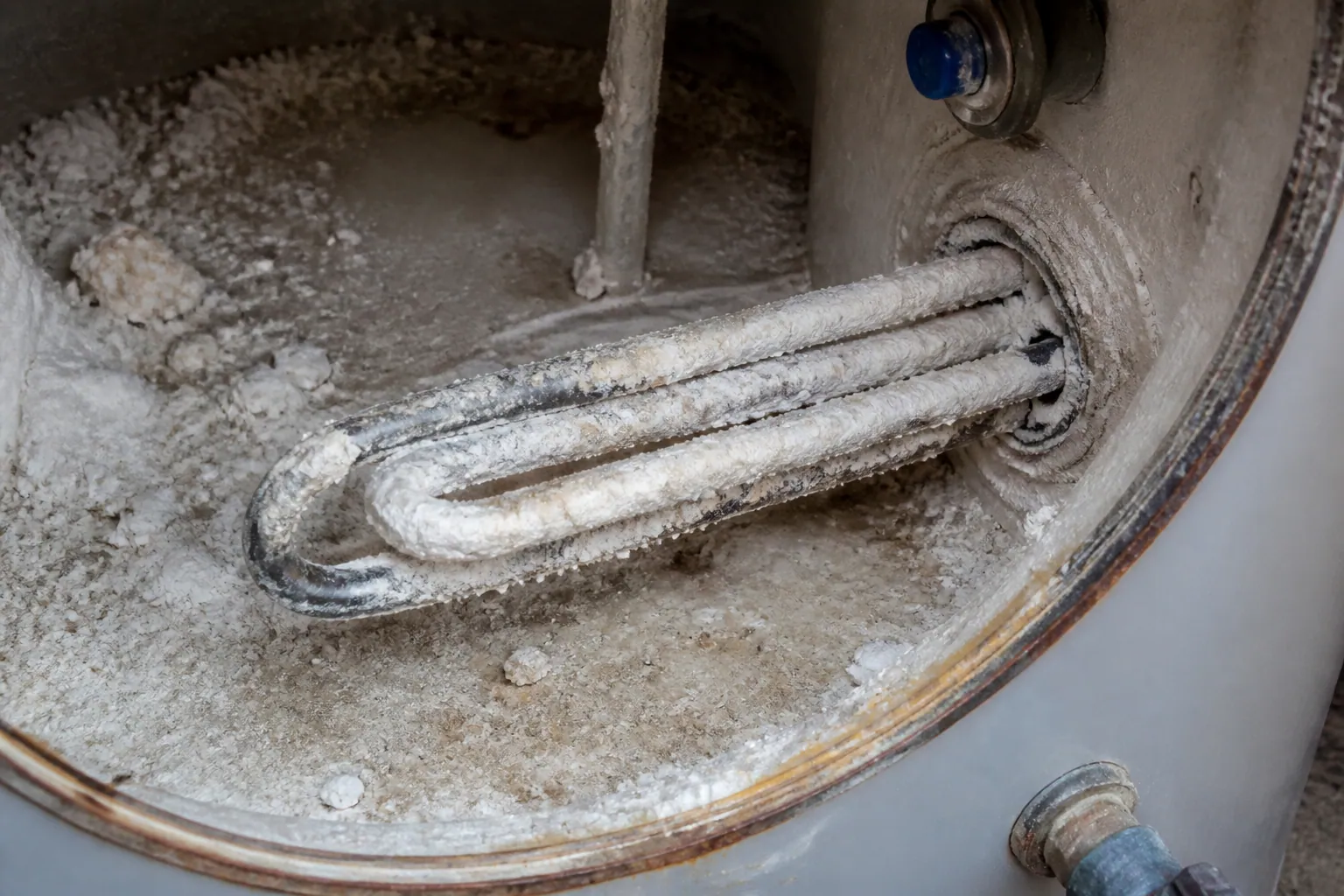
Scale on the heating surface and sediment in the bottom of the tank are why a unit gets noisy or runs out of hot water early. The published year ranges do not give a separate “Lakeland subtracts X years” figure. Flushing sediment is ordinary maintenance. The tankless fact sheet also says to inspect the anode rod every three to four years. That rod is what corrodes instead of the tank.
A house on a private well is not the city number. Only a test on that tap tells you the hardness.
40 gallon and 50 gallon tanks
People ask how long a 40 gallon water heater lasts, and the same question for a 50 gallon tank. The Building America ranges are about the type of heater, tank or tankless, not about the gallon size. A 40 gallon tank and a 50 gallon tank sit in the same 10 to 15 year tank range in that fact sheet.
Gallon size changes how long a shower lasts, not the year printed on those two documents. A household that outgrows a 40 gallon tank runs out of hot water. That is a sizing problem. A tank that leaks at the steel is an age and corrosion problem. They get mixed up on the phone. Say which one you have: no hot water left at the end of a shower, or water on the floor.
What shortens the life in a Florida house
A unit in a hot garage or an attic runs in hotter air than one in a conditioned closet. The temperature setting matters too. The post on what temperature a water heater should be set at is the place for that dial.
Sediment from the hardness above, a skipped anode check, and a tank that sits in a hot garage are the local reasons a unit lands at the short end of the 10 to 15 year range. None of those is a new year count. They are the things to look at when the tank is noisy, rusty, or already wet at the base.
How to find the age
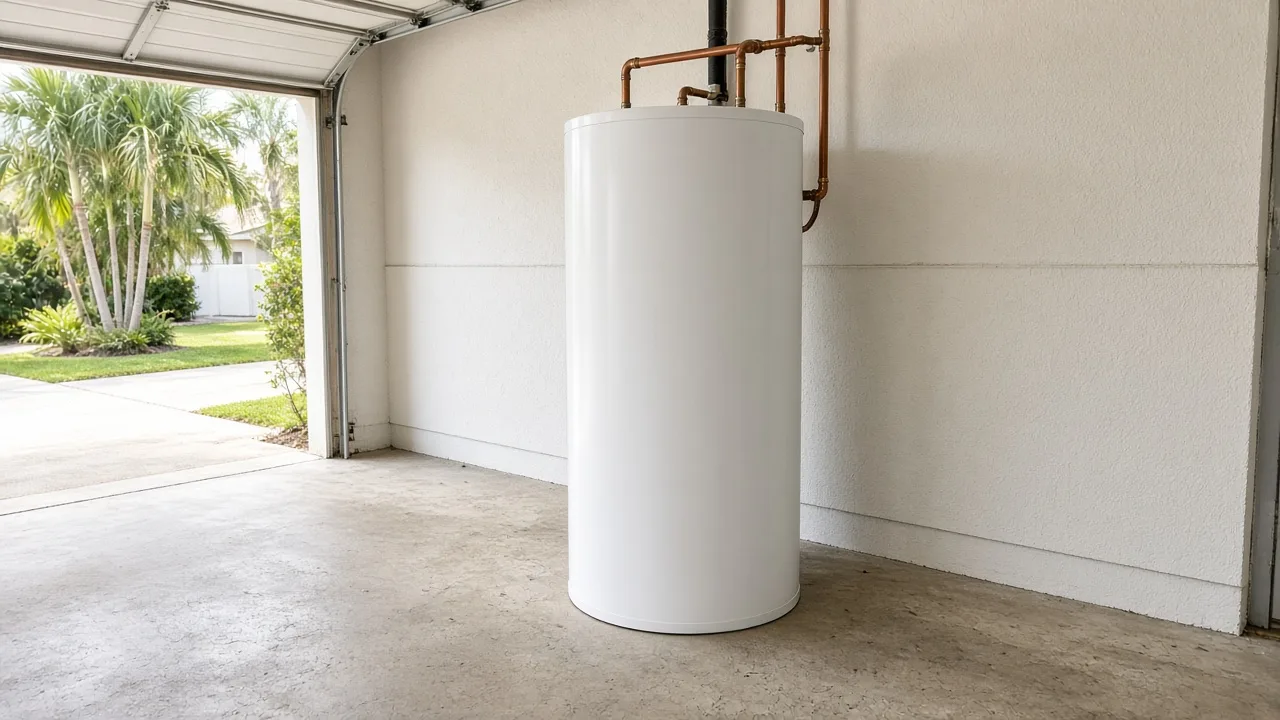
Read the label. Many tanks print a manufactured date. If you only see a serial number, use the manufacturer’s own lookup. The photo here is a tank in a garage. The age is on the label of your unit, not on the shape of the tank.
Count from that date, then put it next to the 10 to 15 year tank range or the tankless range above. A missing label is not a reason to guess. The symptoms in the next section still tell you whether to book a repair or a replacement.
Signs it is near the end
Rust-colored water, a puddle under the tank, or hot water that runs out faster than it used to are the usual signs. Popping and rumbling often mean sediment on the bottom. The longer list is in 5 indicators your water heater needs to be replaced.
Age plus one of those signs is a different conversation than age alone. A 12 year old tank with clear water and a full shower can stay. A 9 year old tank with water at the base of the steel cannot.
Repair or replace
A failed thermostat or a heating element can be a repair. A tank that is leaking from the steel is a replacement. Repairing vs replacing your hot water heater covers that split.
For a new tank or a tankless unit, start at water heaters. For a unit that still has hot water but is failing, start at water heater repair. Call (863) 667-6364.