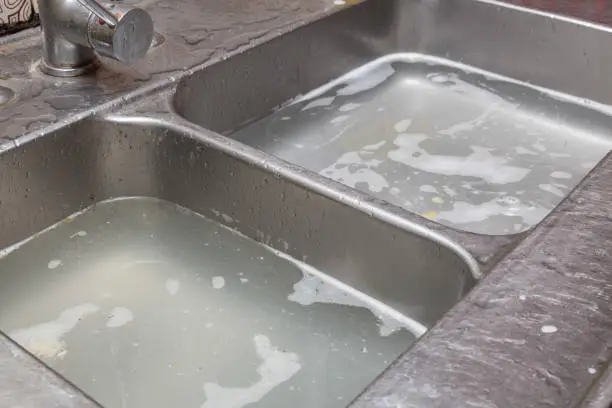
Turn off the faucet so the sink can’t overflow. Before reaching into the basin or picking up a plunger, find out whether anyone has poured drain cleaner into it. If cleaner may still be in the water, leave the sink undisturbed. Don’t plunge, scoop out the water, remove the trap or add anything else. Check the instructions on the bottle and tell your plumber what went in. What to do after using Drano.
Can I plunge a sink with standing water?
If you know the water is free of drain cleaner, start with the stopper or strainer. Hair and debris caught at the opening can slow a bathroom sink. On a plain sink without a disposal, a flat sink plunger can help with a shallow clog. Leave enough water to cover the plunger cup and stop if water starts rising in another fixture. A clog that keeps coming back deserves a closer look. Hair clogs in bathroom drains.
Why does water come up on the other side of my kitchen sink?
Both bowls may empty through the same pipe. If one bowl fills when the other drains, the restriction may be downstream of the point where they join. If the sink has a garbage disposal, leave it switched off and keep your hands out of it. See how to check a backed-up garbage disposal.
When should I call about standing water in a sink?
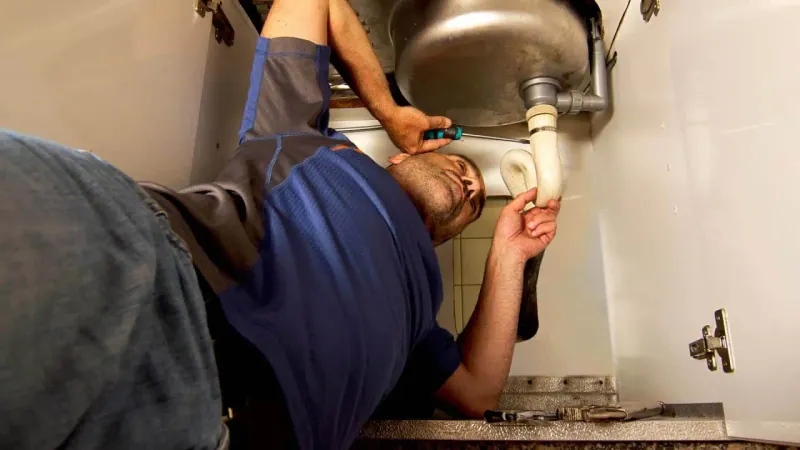
If a shower, toilet or tub also backs up, stop using the affected fixtures and describe the pattern when you call. A plumber can use that information to distinguish a shared drain backup from a clog confined to the sink. If water is leaking under the cabinet, leave the sink out of use and mention the leak as well.
In Lakeland, Plant City and nearby communities, request a visit for a sink with standing water or call True Plumbers & AC at (863) 667-6364. Tell us which sink is affected, whether the water level changes and whether any drain cleaner was used.